indie folk/country duo anchor & the butterfly is a collaboration between songwriter and singer Bridget Robertson and guitarist Lance Hillier.
From a converted shed in the backyard Central Victoria, Australia home they spin their stark and delicate magic with a bracing dose of heartbreak and despair.
The duo released their debut album “Nothing to Win Nothing to Lose” in early 2014. The album was written and recorded over a three year period.
The video for “Lone Star” features darkly moody visuals by Kain White that express beautifully the ebb and flow of the instrumentation and Robertson’s yearningly lilting voice floating above.
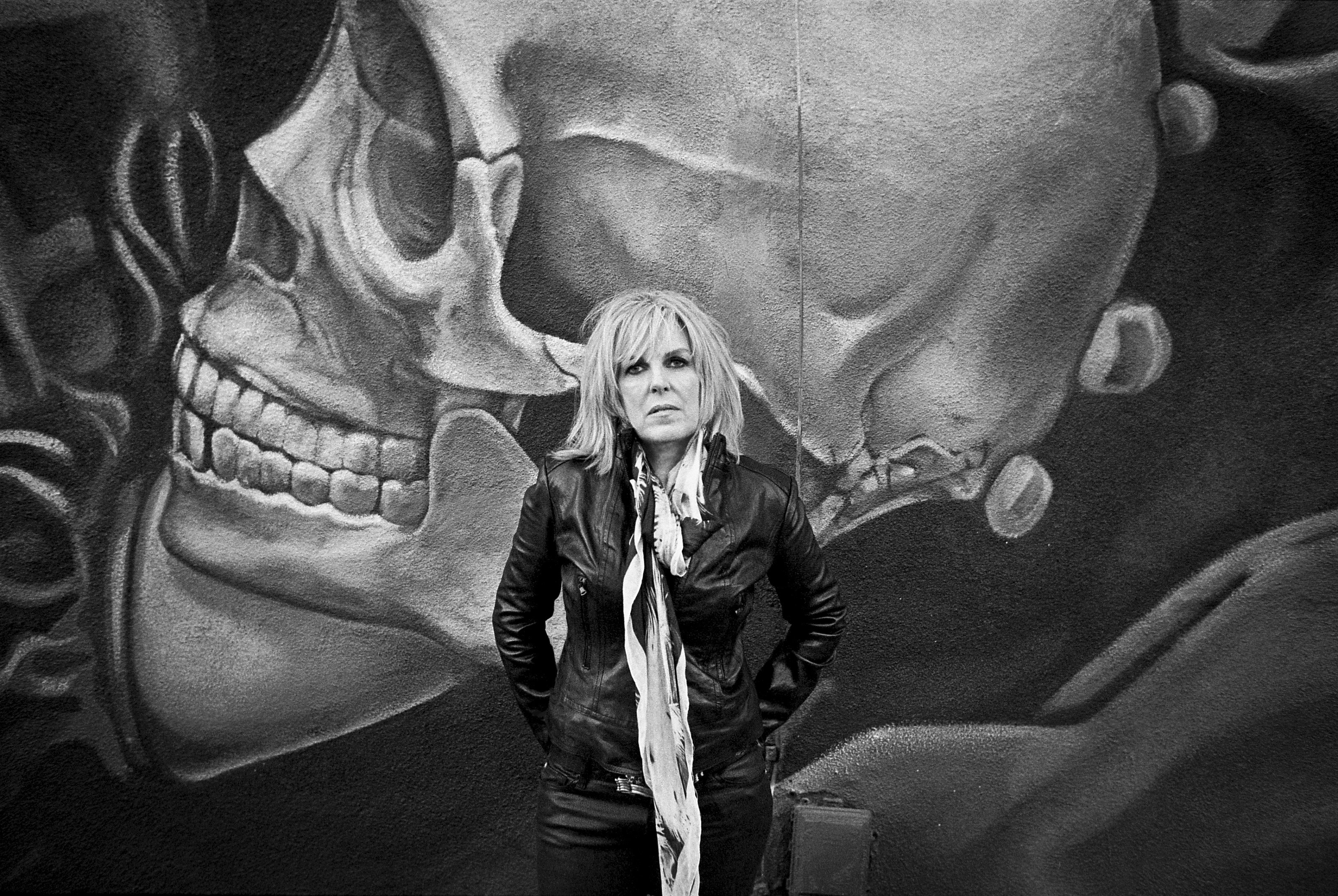
Roots-music legend, and three-time Grammy Award winner Lucinda Williams is set to release her first-ever double album “Down Where The Spirit Meets The Bone” on September 30 though her very own Highway 20 Records
“Down Where The Spirit Meets The Bone” is said to be ” Williams’ most ambitious and adventurous projects to date.” It features 20 new songs, with 18 written by Williams. The album’s opening track, “Compassionâ€, was originally a poem by her father, the poet Miller Williams, in which she wrote the music and additional lyrics.
From the press release “This is a personal milestone for Williams as it marks the first time she has composed music for one of her father’s poems, and it is from that song that the album title was taken. ”
The album also features a cover os JJ Cale’s “Magnolia.â€
“Down Where The Spirit Meets The Bone” features performances by guitarists Bill Frisell and Tony Joe White, Faces keyboardist Ian McLagan, Elvis Costello’s rhythm section of Pete Thomas (drums) and Davey Faragaher (bass) and Wallflowers guitarist Stuart Mathis. Jakob Dylan adds harmony vocals on “It’s Gonna Rain.†Williams’ longtime rhythm section of Butch Norton (drums) and David Sutton (bass) make also contribute. D”Down Where The Spirit Meets The Bone” was produced by Williams, Tom Overby and Greg Leisz.
Of the Album Williams says ” “I didn’t set out to do a whole album of country-soul, but once I started working, a stylistic thread kind of emerged,†she says. “It’s a sound I can relate to, one that’s really immediate and really timeless at the same time — kind of sad in an indefinable way. It’s like something my dad said to me many years ago, something I wrote down and included in my song “Temporary Nature (Of Any Precious Thing)†because it was so profound to me — ‘the saddest joys are the richest ones.’ I think that fits this album really well.â€
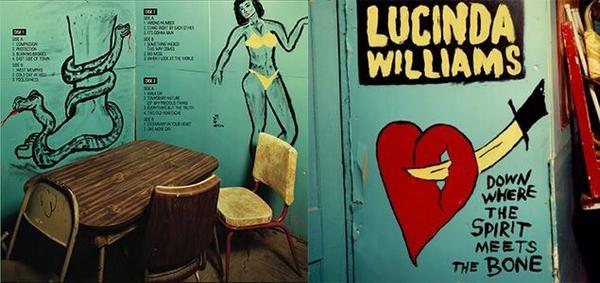
EDIT: Here is the front and back covers. (The back is for the vinyl version.) The photos are by Birney Imes from his book “Juke Joint”. It is the same book that provided the cover for “Car Wheels On A Gravel Road”, as well as the photo that inspired the song “2 Kool 2 Be Forgotten”
See Williams perform “Something Wicked This Way Comes” from “Down Where The Spirit Meets The Bone”
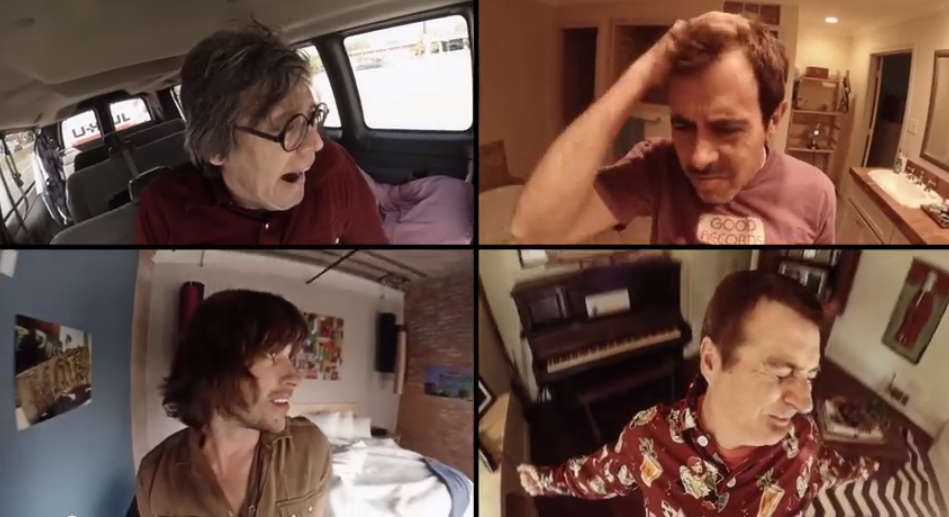
Let’s go kids as we follow a day in the life of Rhett Miller, Murry Hammond, Ken Bethea and Philip Peeples – collectively known as NorTex alt.country stalwarts The Old 97s. The video follows each member in a spilt-screen quadrants as they travel through various routines and states of consciousness (or not.) tier paths collide onstage at a hometown show in Dallas.
I can only surmise from the video that the definition of “get it on’ is put on a damn fine rock show, right guys? Right?
The Old 97’s released their recent album “Most Messed Up†in April on ATO Records.
Wait for the hilarious surprise ending. It’s worth it, believe me.
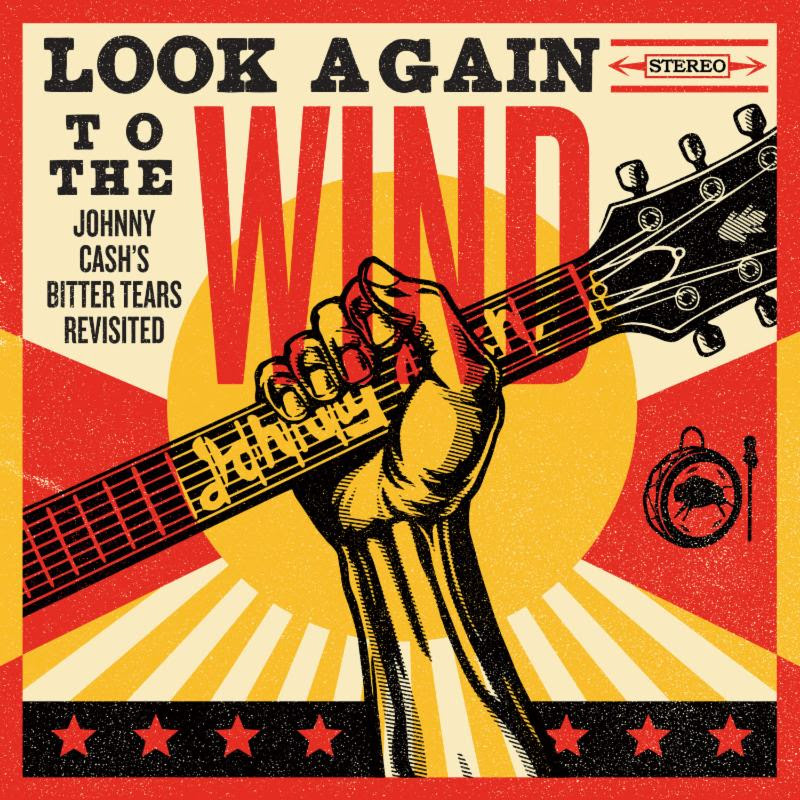
To celebrate the 50th Anniversary of one of Johnny Cash’s most personal releases, “Bitter Tears: Ballads of the American Indian,” Sony Music Masterworks will commemorate the occasion with “Johnny Cash’s Bitter Tears Revisited” ( August 19.) Produced by Joe Henry and featuring country and Americana music giants Kris Kristofferson, Emmylou Harris, Steve Earle, Bill Miller, Gillian Welch and David Rawlings, and Norman and Nancy Blake, as well as up-and-comers the Milk Carton Kids and Rhiannon Giddens. Each artist interpreting the music for a new generation. As his project was for Cash, the new collection “is a labor of love with a strong sense of purpose fueling its creation.”
Of all the dozens of albums released by Johnny Cash during his nearly half-century career, 1964’s Bitter Tears: Ballads of the American Indian was among the closest to the artist’s heart. A concept album focusing on the mistreatment and marginalization of the Native American people throughout the history of the United States, its eight songs-among them “The Ballad of Ira Hayes,” a #3 hit single for Cash on the Billboard country chart-spoke in frank and poetic language of the hardships and intolerance they endured.
“Prior to Bitter Tears, the conversation about Native American rights had not really been had,” says Henry, “and at a very significant moment in his trajectory, Johnny Cash was willing to draw a line and insist that this be considered a human rights issue, alongside the civil rights issue that was coming to fruition in 1964. But he also felt that the record had never been heard, so there’s a real sense that we’re being asked to carry it forward.”
Bitter Tears, widely acknowledged for decades as one of Cash’s greatest artistic achievements, did not realize its stature as a landmark recording easily and quickly. At the time that Cash proposed the album, he was met with a great deal of resistance from his record label. They felt that a song cycle revolving around the Native American struggle as perpetrated by the white man took him too far afield of the country mainstream and Cash’s core audience. Cash still released the album and although it did not perform as well as he had hoped, he remained extremely proud of the album throughout his life.
Ironically, at the same time that his own label was balking because it felt he would alienate the country audience with his Native American tales, Cash was finding a new set of admirers among the burgeoning folk music crowd that had recently made stars of Bob Dylan, Joan Baez and Peter, Paul and Mary. Cash’s debut performance of “Ira Hayes” at the 1964 Newport Folk Festival had earned him rave reviews. His appeal was undeniably expanding beyond the country audience, and for those who did connect with Bitter Tears, among them a 17-year-old aspiring singer-songwriter named Emmylou Harris, its music was revelatory and important. “The record was a seminal work for her as a teenager,” says Henry. “She bought the album brand new and realized at that moment that Johnny Cash was a folk singer, not a country singer, and was involving himself politically and socially in a way that she had identified with the great folk singers at that moment.”
Henry’s awareness of Harris’ affection for Bitter Tears led him to invite her to contribute to Look Again To The Wind: Johnny Cash’s Bitter Tears Revisited. Following the epic, nine-minute album-opener “As Long as the Grass Shall Grow,” written by Peter La Farge-a folk singer-songwriter with Native American bloodlines who Cash had befriended-and sung here by Welch and Rawlings, Harris takes the lead vocal on the Cash-penned “Apache Tears,” which also features sweet, close harmonies by the Milk Carton Kids, the duo comprising Kenneth Pattengale and Joey Ryan. For Henry, carefully matching artist to song was integral to the integrity of Look Again To The Wind. For some of the tracks, that process required a great deal of consideration. But when it came to deciding who would interpret “The Ballad of Ira Hayes,” Henry quickly zeroed in on Kristofferson.
Another of five songs on the original album written by La Farge, “The Ballad of Ira Hayes” is based on the true story of Ira Hamilton Hayes, a Pima Indian who was one of the six Marines seen raising the flag at Iwo Jima in an iconic World War II photograph. Hayes’ moment of glory was followed upon his return to civilian life with prejudice and alcoholism-Cash, moved by Hayes’ story and La Farge’s recounting of it, vowed to record the song. When planning out Look Again To The Wind, Henry knew that only a few living singers could deliver the song the way he wanted to hear it. He called Kristofferson, utilizing Rawlings and Welch to sing background.
“I wanted somebody whose relationship with Johnny Cash was not only musical but personal,” he says. “I’d worked with Kris on a couple of other things and I thought why not ask? Who else has a voice with that kind of power and authority?” That same sense of intuition guided Henry to choose the other participants and the material they would render. For La Farge’s “Custer,” the album’s third song, the producer knew instinctively that Steve Earle was the right man for the job. “Steve is an upstart, and there are very few people I can imagine working right now who could deliver a song that is that pointed in that particular way and do it authentically without cowering from it or making it feel a little too arch,” Henry says. “He really could embody the kind of swagger that that song insists upon.”
Similarly, Henry chose Nancy Blake (with Harris and Welch on backing vocals) for the Cash-written “The Talking Leaves,” Norman Blake to sing “Drums,” the Milk Carton Kids to lead “White Girl” (both of those authored by La Farge) and the powerhouse vocalist Rhiannon Giddens of the Carolina Chocolate Drops for the original album’s finale, “The Vanishing Race,” written by Cash’s good friend Johnny Horton. To bolster the album (the original, typical of mid-’60s vinyl LPs, ran just over a half hour), Henry fills out the track list of Look Again To The Wind with reprises of “Apache Tears” and “As Long As the Grass Shall Grow”-both sung by Welch and Rawlings-and ends the set with the title track, a La Farge tune that did not appear on the original Johnny Cash album but instead on the songwriter’s own 1963 release As Long as the Grass Shall Grow: Peter La Farge Sings Of The Indians. Here it’s sung by Bill Miller, with Sam Bush providing mandolin and Dennis Crouch upright bass, a fine and fitting coda to the collection.
From the start, Henry looked at the project as one that would require great personal commitment and responsibility on his own part. Approached as potential producer of the project by the man who first envisioned it, Sony Music Masterworks’ Senior Vice President Chuck Mitchell (who’d been in conversations with Antonino D’Ambrosio, author of A Heartbeat and a Guitar,a book about the making of Bitter Tears), Henry immediately understood the importance of the assignment. “Johnny Cash was my first musical hero and I feel a profound debt to him as an artist, and as a courageous one,” he says. “How could I say no to that?”
He also realized that the Bitter Tears album held a special place in Cash’s canon, and that in many ways the issues it raised still resonate today-this had to be apparent in the new versions. “Mr. Cash knew that if he took this on, even if his point of view was not adopted, he had the power to be heard,” Henry says.
The album was recorded in three sessions: the first two in Los Angeles and Nashville and, lastly, one at the Cash Cabin, in Cash’s hometown of Hendersonville, Tennessee, where Bill Miller cut his contribution. Providing the instrumental backing for most of the album are Greg Leisz (steel guitar, guitars), Keefus Ciancia (keyboards), Patrick Warren (keyboards for the L.A. sessions), Jay Bellerose (drums) and Dave Piltch (bass).
TRACKLIST:
As Long as the Grass Shall Grow – Gillian Welch & David Rawlings
Apache Tears – Emmylou Harris w/The Milk Carton Kids
Custer – Steve Earle w/The Milk Carton Kids
The Talking Leaves – Nancy Blake w/ Emmylou Harris, Gillian Welch & Dave Rawlings
The Ballad of Ira Hayes – Kris Kristofferson w/ Gillian Welch & David Rawlings
Drums – Norman Blake w/ Nancy Blake, Emmylou Harris, Gillian Welch & David Rawlings
Apache Tears (Reprise) – Gillian Welch & Dave Rawlings
White Girl – The Milk Carton Kids
The Vanishing Race – Rhiannon Giddens
As Long as the Grass Shall Grow (Reprise) – Nancy Blake, Gillian Welch & Dave Rawlings
Look Again to The Wind – Bill Miller
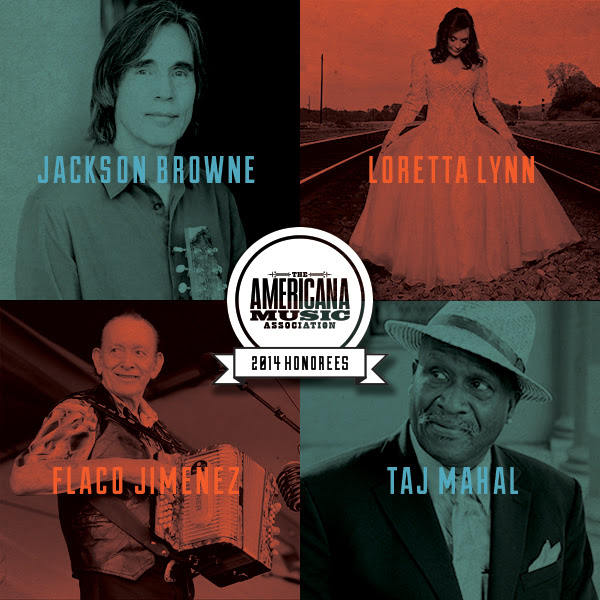
The 15th annual Americana Music Festival & Conference will take place September 17-21, 2014 in Nashville, Tenn. Tickets for the Honors & Awards are only available with the purchase of a conference registration.
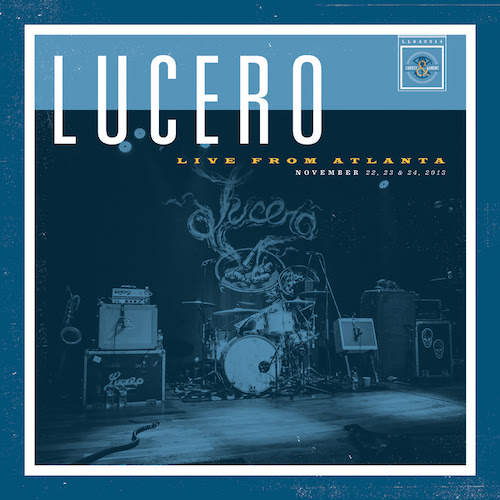
Her’s a taste of “Live from Atlanta” the first ever Lucero formal live release.
Below you can stream a live version of “Sweet Little Thingâ€, a classic ballad originally from the band’s sophomore effort Tennessee.
“Live from Atlanta” spans the roots-rock band’s career. Recorded over three nights in Atlanta’s Terminal West, it’s a collection of 32 cuts mixing folk, country, soul and punk rock.
About their live performance front man Ben Nichols says “We’re each playing in a completely different band. We’re on stage and each playing in our own Lucero. I’m not sure that’s how it works for other bands.â€
The Americana Music Association continues its tradition of showcasing some of the best in Americana and roots music by it’s partial roster of Americanfest performers released today.
Though the lineup doesn’t show any groundbreaking direction, I’m fine with that. There are lots of folks on the list that have been busting their hump for years and deserve this recognition rather then inserting acts to placate outsider accusations of one thing or another. Personally I’m happy to see Casa Twang favorites Howlin’ Brothers, Jamestown Revival, John Moreland, Lera Lynn, Marah and Ben Miller Band on the bill. And Texas is well-represented by Billy Joe Shaver, Sarah Jarosz, Jason Eady and Hayes Carll
The event is celebrating its 15th as the premier Americana event by welcoming 160 performers taking the stage at 11 venues including 3rd & Lindsley, The Basement, City Winery, High Watt, Cannery, Mercy Lounge, The Rutledge, Station Inn, Music City Roots, Downtown Presbyterian Church and Musicians Corner.
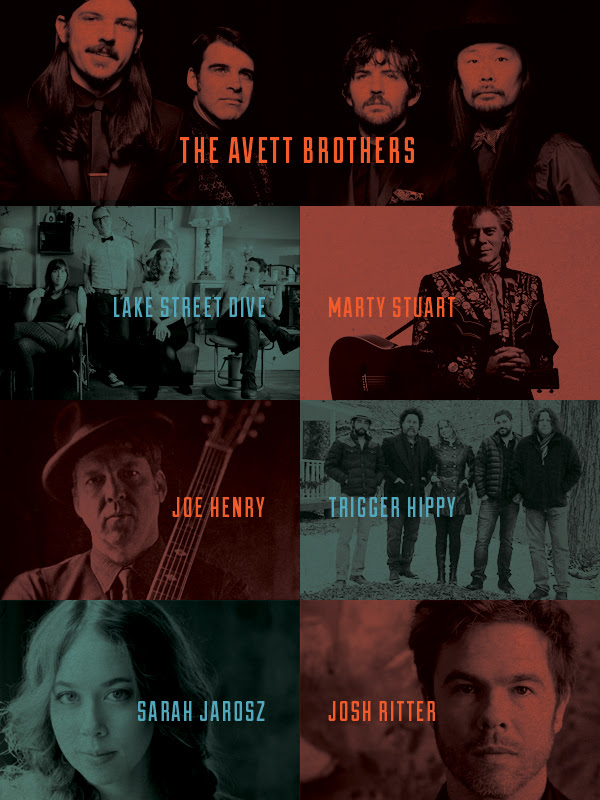
Three-time Americana Group of the Year, The Avett Brothers, will headline the event at Riverfront Parl on Saturday Sept. 20. Americana’s Music Festival & Conference registrations will have access. Tickets for the general public will go on sale Friday, June 27 at 10AMat www.ticketfly.com.
The first half of Americanafest’s performing artist list includes:
Allison Moorer
Amy Ray
Angaleena Presley
The Avett Brothers
The Barefoot Movement
Ben Miller Band
Billy Joe Shaver
Black Prairie
Brennen Leigh and Noel McKay
Buddy Miller
The Cactus Blossoms
Carlene Carter
Caroline Rose
Chatham County Line
Chuck Mead
Danny & The Champions of the World
The Deadly Gentleman
Del Barber
The Deslondes
Doug Seegers
The Duhks
The Dustbowl Revival
Emily Barker & the Red Clay Halo
Ethan Johns
The Fairfield Four
The Grahams
Grant-Lee Phillips
Green River Ordinance
Greensky Bluegrass
Gregory Alan Isakov
Greyhounds
The Harpoonist & the Axe Murderer
Hayes Carll
Howlin’ Brothers
Immigrant Union
Israel Nash
Jamestown Revival
Jason Eady
JD Wilkes & the Dirt Daubers
Joe Henry
Joe Pug
Joe Purdy
John Moreland
Jonah Tolchin
Jonny Two Bags
Josh Ritter
Joshua James
Lake Street Dive
Lee Ann Womack
Leo Welch
Lera Lynn
Marah Presents: Mountain Minstrelsy
Marty Stuart
Matthew Ryan
McCrary Sisters
Nathaniel Rateliff
New Country Rehab
Oh Susanna
Otis Gibbs
Parker Millsap
Paul Thorn
Pete Molinari
Quebe Sisters Band
Rhett Miller
Robbie Fulks
Robyn Hitchcock
Rodney Crowell
Ruthie Foster
Ryan Montbleau
Sam Outlaw
Sarah Jarosz
Sean Rowe
Shakey Graves
Suzy Bogguss
Todd Snider & Friends
Tom Freund
Tony Joe White
Trigger Hippy (feat. Jackie Greene, Joan Osbourne, Steve Gorman, Tom Bukovac & Nick Govrik)
Whiskey Shivers
Willie Watson
The 15th annual Americana Music Festival & Conference occurs September 17-21, 2014 in Nashville, Tenn. The 13th annual Americana Honors & Awards Show on Sept. 17 at the historic Ryman Auditorium.
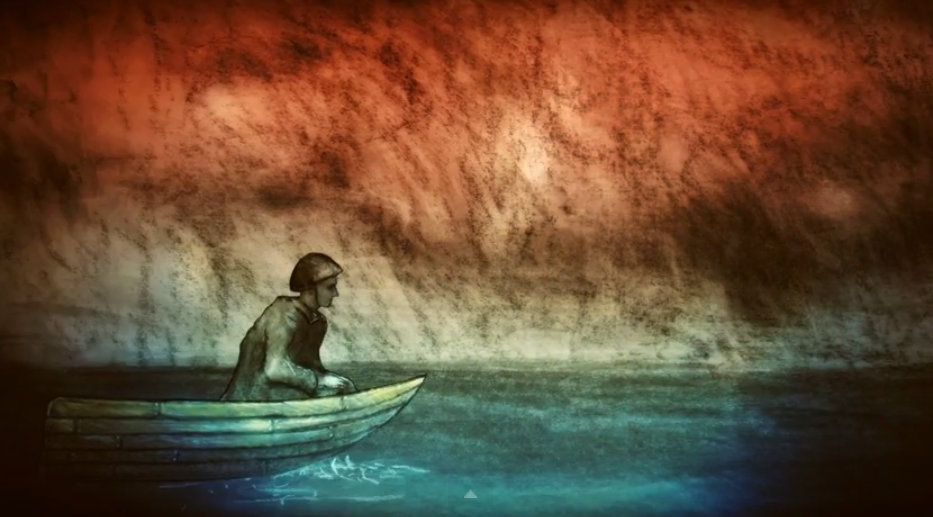
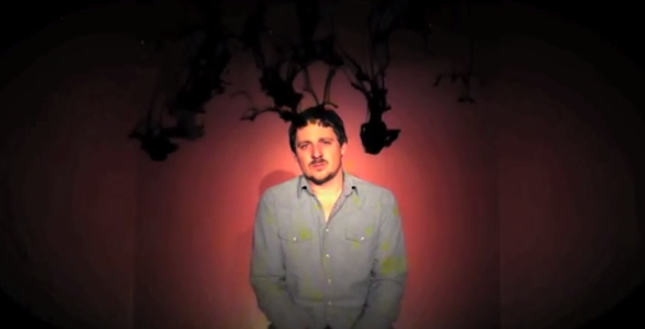
Sturgill Simpson’s latest video, is for his dour yet heartfelt of version of Manchester synth-pop band When In Rome’s 1988 hit “The Promise.” (also included below for reference)
Simpson sits singing looking directly at you. Aashed-out colors fill in the grey-tone frame. Colors swirl and wash until replaced by inky clouds claustrophobically closing in.
And then.. he’s gone.
“The Promise” is a cover but Simpson makes it his own and shapes one of the best songs on his excellent release “Metamodern Sounds in Country Music.â€
Ladies and Gents great country music is alive and well and, yes, sometimes it still comes from Music Row.
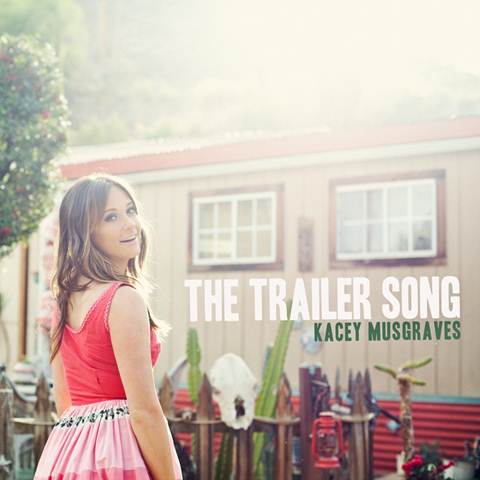
GRAMMY-award winning singer/songwriter Kacey Musgraves has a response to self-rightous neighbors and it’s “The Trailer Song,†and it’s a honky-tonk delight (with an “awww haaawww’ for bonus points)
The song was written by Musgraves, and her usual partners in crime Brandy Clark and Shane McAnnally
Last week Musgraves performed “The Trailer Song†on The Tonight Show Starring Jimmy Fallon (see below.)
Purchase “The Trailer Song.†at Musgraves’ website.
Musgraves is currently on tour this summer with Willie Nelson and Alison Krauss as well as Katy Perry on her Prismatic World Tour.