There’s a kind of magic that happens on a cool spring morning when the sun hasn’t quite warmed the sidewalks and the smell of fresh coffee mixes with the tang of old vinyl. It’s Record Store Day — that once-a-year celebration of grooves and ghosts — and this year, the date is Saturday, April 18, 2026. On that morning, independent record stores across the country will throw open their doors, and at the stroke of opening hour, lovers of sound will line up like they’re waiting for the doors of the Ryman Auditorium circa 1975 — all hope, heart, and beat-up boots.
This year’s Record Store Day offerings are rich with history, surprise, and serious vinyl heartbeat. From deep catalog treasures to first-ever pressings and special editions, 2026’s list reads like the soundtrack to an epic road trip through sound.
See the full list.
13th Floor Elevators – We Are Not Live – reprise of the 1968 album ‘Live’ by the 13th Floor Elevators. Spurned at the time for being billed as “Live” when in fact it was a compilation of previously recorded studio masters, outtakes and alternate mixes. The “very loud” crowd noise was overdubbed and was actually taken from a boxing match and wholly inappropriate for the purpose. Now, almost 60 years on, the album masters are available, in their original sequence, without the crowd noise, to be enjoyed in their full psychedelic splendor.
The Blasters – Rare Blasts: Studio Outtakes And Movie Music 1979-1985 – Rare Blasts is a compilation of outtakes and movie music tracks from the roots-rock Americana band’s 1980s studio albums. The 14-track collection was compiled as part of the sold out 5-LP box set, An American Music Story, released for RSD 2025. The LP features highly collectible tracks from their studio recordings many never available previously on vinyl. Includes liner notes from L.A. music writer Chris Morris. Pressed on cobalt blue vinyl exclusively for Record Store Day.
Jeff Buckley – Live À L’Olympia – This live album captures Jeff Buckley and band across two nights in Paris July 6th & 7th during his 1995 European tour in support of the release of his Grace album. Captured at the legendary Olympia, it found Buckley before a rapturous French crowd performing half of the songs from his beloved debut album ( including favorites like “Lover, You Should Have Come Over” and “Hallelujah”) plus covers as varied as the MC5’s “Kick Out The Jams,” a Led Zeppelin parody and songs made famous by Nina Simone and Edith Piaf. In addition, the album features an additional live performance of Buckley and Alim Qasimov in a competitive Qawwali singing duet from a festival of sacred music also captured that year in France. Originally released in 2001, this marks the album’s first time on vinyl exclusively for Record Store Day.
Kaitlin Butts – Yeehaw Sessions – Kaitlin Butts: Yeehaw Sessions is a 12” black vinyl release combining two of Kaitlin’s Eps, never before released on vinyl.
Brandi Carlile – Live At Easy Street Records Vol II – Nearly two decades after recording her first live album at Seattle’s Easy Street Records, Brandi Carlile returned to the iconic record store for Brandi Carlile Live at Easy Street Records Vol. II. Celebrating her 8th studio album, Returning To Myself, the show marked a full-circle moment for the 11x Grammy Award winner. Joined by The Hanseroth Twins and SistaStrings, Carlile played to a full house and was met with an outpouring of love from fans who celebrated her return to the city where it all began.
Tyler Childers – Live From Dinosaur World – A 7” single featuring live renditions of “Bitin’ List” and “Dirty Ought Trill” performed during the release weekend of Tyler Childers’ critically acclaimed album Snipe Hunter, exclusive to indie record stores for Record Store Day 2026.
Crosby, Stills & Nash – The Solo Albums – The landmark debut solo albums from David Crosby, Stephen Stills and Graham Nash after the overwhelming success of the Crosby, Stills & Nash and ‘Deja Vu’. This set also includes an LP of rarities from demos and sessions for all three albums.
Skeeter Davis – The End of the World: The Navy Hoedown Sessions – Skeeter Davis fans are in for a fascinating detour with The Navy Hoedown Sessions, a 50th-anniversary reissue of the 1975 double album that is as much a historical curiosity as it is a musical treat. Originally produced for the U.S. Navy as a recruitment recording, the album was pressed in very limited quantities and has remained almost unheard. Featuring Davis’s signature country-pop sound and some of her greatest hits, these recordings are a true delight. Pressed on pink vinyl for Record Store Day 2026, don’t miss this rare opportunity.
Iris DeMent – The Way I Should (30th Anniversary) – In celebration of the album’s 30th anniversary, Yep Roc Records is pressing The Way I Should on vinyl for the first time. The album is remastered by Mike Westbrook of Material Mastering and is pressed on Summer Sky color vinyl, limited to 1,000 copies worldwide.
Jerry Garcia – Reflections (50th Anniversary) – One of Garcia’s most artistically unified statements of harmony, affirmation, and joy celebrates its golden anniversary with an expanded 3xLP set. Reflections (50th Anniversary Edition) presents the remastered original studio album, recorded with the Grateful Dead and the Jerry Garcia Band – plus two bonus LPs featuring studio outtakes, jams and four previously unreleased live recordings. The collection is housed in a tri-fold mirror board jacket and pressed in a limited edition of 5,000.
The Jayhawks – 2 Meter Sessions – Never-before-released recordings – Amsterdam 1997 & 2000
for the first time ever on vinyl, the jayhawks present 2 meter sessions – an exclusive record store day 2026 release featuring two amsterdam sessions from 1997 and 2000.
Waylon Jennings & The Waylors – The Balladeer meets the Dukes of Hazzard – During the process of archiving and unearthing Waylon’s lost studio recordings, his son Shooter found the original recordings of lines of the Balladeer for the first two episodes of the Dukes of Hazzard, complete with bloopers and out-takes. Shooter also found the original recordings for the soundtrack to first season of the Dukes, produced by Richie Albright, and featuring Waylon and his smoking backing band.
George Jones – Cold Hard Truth – George Jones’ 1999 return to traditional country music, his first album with Asylum Records. Produced by Keith Stegall, the album features strong, original honky-tonk ballads and raucous tunes, reminiscent of Jones’ classic recordings. Cold Hard Truth is one of Jones’ strongest albums in nearly two decades, offering a consistent, high-quality listening experience. Pressed for Record Store Day on light blue vinyl.
Freddie King – Feelin’ Alright: The Complete 1975 Nancy Pulsations Concert – For the first time ever, experience the full power of Freddie King’s explosive 1975 performance at the Jazz Pulsations Festival in Nancy, France — a never-before-released live set that captures the Texas blues legend at his fiercest. King roars through a high-energy set of blues, funk, and soul-drenched grooves, backed by a razor-sharp band and fueled by his searing guitar tone and powerhouse vocals.
Mark Knopfler & Emmylou Harris – All The Roadrunning – To celebrate its 20th anniversary, the collaboration album between Dire Straits’ Mark Knopfler and Emmylou Harris, All The Roadrunning, is reissued on 2LP smoky marble vinyl as part of Record Store Day 2026.
Little Feat – Little Feat (Deluxe Edition) – Next in the lineup of foundational Little Feat albums to get the Rhino Deluxe treatment is the band’s 1971 self-titled debut album. Releasing as a 2LP vinyl set exclusively for Record Store Day 2026, it includes the original album, AAA-cut from original master tape, alongside a bonus disc of rare previously unreleased alternate versions and outtakes from their early recording sessions.
Joni Mitchell – For The Roses – Joni’s 1972 album, For The Roses, was her first for David Geffen’s Asylum Records. Joni originally had intended the album cover to be art that she created that was illustrative of the song, “For The Roses,” and showed her cynicism to the music business at the time. Geffen vetoed her artwork because he thought it was not a good look to have a horse with roses coming out of its ass! So Joni ultimately compromised to use the Joel Bernstein photo that was ultimately the cover. This special limited edition for Record Store Day restores Joni’s original vision for the cover artwork for the first time. Pressed on rose color vinyl.
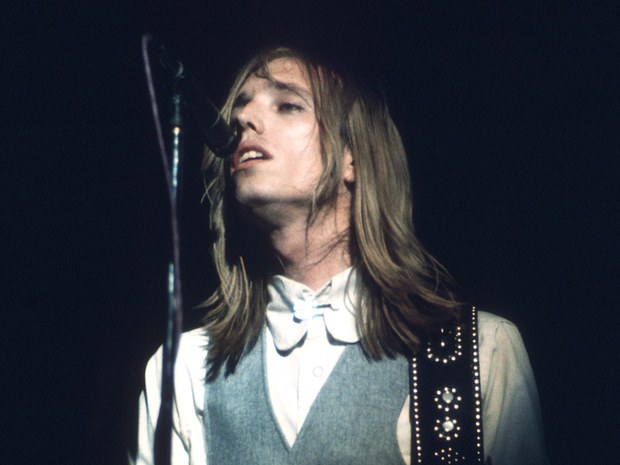
Tom Petty & The Heartbreakers – July 16, 1978 – Paradise Theater, Boston, MA – A wild night from the You’re Gonna Get It tour was recorded on 2-track at the Paradise Rock Club in Boston, MA, and broadcast by local rock radio station WBCN-FM.
Robert Plant – Saving Grace: All That Glitters… with Suzi Dian – Saving Grace: All that Glitters… is a continuation of Plant’s Saving Grace album and his beautiful collaboration with Suzi Dian and their band. It features four new studio recordings.
John Prine – Found Dogs – A newly curated archival release celebrating the 30th anniversary of Lost Dogs & Mixed Blessings. Drawn from the original recording sessions and demos from the era, Found Dogs collects alternate versions, acoustic performances, and five previously unreleased tracks, offering a rare look into Prine’s songwriting and studio process during a pivotal period of his career.
John Prine – BBC Sessions – John Prine recorded live for BBC radio. Featuring solo performances of songs from his first two albums. First official release. 1-LP 140g black vinyl.
Son Volt – Sound Signal Serenades – Son Volt’s latest album, Sound Signal Serenades, released on Sky Blue Opaque vinyl as a special version for Record Store Day 2026. Featuring twelve originals, Son Volt’s return to the elemental strengths that have long defined their sound—restless guitars, melodic clarity, and songs rooted in the lived experience of American landscapes. Anchored by Jay Farrar’s steady, unvarnished voice, the record balances reflection and resolve, drawing lines between personal memory and the wider currents of history, change, and endurance.
Bruce Springsteen – Live From Asbury Park 2024 – Available for the first time on vinyl, hear Bruce Springsteen’s electrifying homecoming performance in Asbury Park at the 2024 Sea.Hear.Now festival. Spanning over three hours of powerhouse performances in front of 35,000 people, this 5LP set features Springsteen at his dynamic best, backed by the legendary E Street Band. Spanning Springsteen’s iconic catalog, this record includes hits such as “Thunder Road” and “Dancing in the Dark,” plus songs that Springsteen wrote just down the road from this stage, including “Blinded By The Light” and “Growin’ Up.”
Joe Strummer & The Mescaleros – Global A Go-Go – Celebrating the 25th anniversary of the second album by Joe Strummer and The Mescaleros with a limited splatter color vinyl pressing. Features some of his most well-known songs from the Mescaleros era, including “Mondo Bongo,” “Johnny Appleseed,” and “Bhindi Bhagee.”
Various Artists – My Soul Is Lost: Unknown & Forgotten Rural American Musicians – Old-time music compiled by R. Crumb and John Heneghan from their own almost five thousand 78 rpm records in his collection.
Jerry Jeff Walker – Navajo Rug (35th Anniversary) – In celebration of its 35th Anniversary, Jerry Jeff Walker’s Navajo Rug is now available on vinyl for the first time, exclusively for RSD. A fan favorite, the LP features extended liner notes and tracks like “Navajo Rug,” “If I’d Loved You Then,” and Jerry Jeff’s ode to one of his favorite baseball players, “Nolan Ryan (He’s A Hero To Us All).” Pressed on exclusive deep orange vinyl.