The Bigotry Toward Americana

mumford

Last year Giovanni Russonello took to the Atlantic magazine to draw a narrow line from Bob Dylan’s “Americanarama Festival of Music” showcase and the lack of diversity in the genre overall (Why Is a Music Genre Called ‘Americana’ So Overwhelmingly White and Male?)

I called bullshit in that story and I call it on the recent Wall Street Journal’s “Americana Music Awards Nominees Are Mostly Folky, And White.

In the piece Eric R. Danton takes stock of the current crop of Americana Music Award nominees and concludes that they “…skew largely folky, and largely white, with few artists of color among the awards contenders..”

The WSJ is hardly a bastion of political correctness, but there it is. The conclusion drawn from both of these articles is plain to see. Americana is a hotbed of bigotry and should be ashamed.

There appears to be a trend to cast Americana as a bastion of white (presumably straight) males. Much of the stereotypes typically reserved for Music Row guards like Toby Keith appears to be blowing back on it’s rootier cousin.

I’ve been covering this music for almost 8 years and been to over 100 Americana and roots music concerts and festivals. i’ve also been to 6 Americana Conference and Festivals, where the Americana Awards are presented. I see the artists appearing at concerts, festivals and accepting those awards I am also see the many emerging artists that contact me hoping to join those ranks of working musicians.

Males outnumber female performers and yes, there are more white folks than people of color. So what? Is the conclusion that there’s some Americana gatekeeper keeping woman and people of color out of the field? The lazy answer is that they are being kept out, right? Where’s the outrage? Where’s the Americana occupation?

Or perhaps the answer of more pedestrian, there are fewer women and people of color in Americana because they don’t want to be there. Just as hip-hop has few white men and women and pop music has fewer men some music styles appeal to segments of society. This isn’t societal bigotry, it’s diversity in taste.

And with diversity there is the freedom for some to choose another direction.

I have been a past of the community and a tireless advocate for a long time. I’ve met hundreds of fans, musicians and industry folks that love and advocate for this great music. And save for the occasional GRAMMY-nominee (right Linda Chorney?) there is less racial, gender or sexual bias than any other genre (except for perhaps EDM.)

There is, however, a bias in musicianship. The music draws from folk and county, as well as blues, tejano and zydeco, from the expanse of this country. Other genres have emerged to allow a rich market of styles that appeal to people that self-identify.

But if more blacks self-identify with hip-hop or women self-identify with pop, no one sounds the alarm of racism or gender bias on those genres. It’s just seen as the way of progress and choice.

So a casual survey of Americana might lead you to believe it’s chock full of white boys So what? Is their choice less worthy? More suspect? If there’s something about the music that allows males of the caucasian variety to self-identify with it who’s hurt?

Of course America is not lily white. It’s an open community that draws from our rich cultural past, all of it, while forging a future of brave creativity.

Drawing bias from preferences debases the instances of actual bias that corrodes our world. Painting those of a any group – black, brown, gay or, yes, even white, as racist or sexist because of a gravitation toward cultural definition is bigotry cloaked in righteousness.

Of course in America everyone is entitled to their opinion, no matter how misguided. But I am a member of a great and compassionate community and i take this as a personal affront. I know these fans, I know these musicians.

In practicality, “There is no such thing as bad publicity” the phrase most often attributed to that master of self-promotion, Phineas T. Barnum, applies here. If Americana and roots music wasn’t thriving and growing in influence it wouldn’t be a target for this nonsense. So there’s that.

But personally I believe that those that dare condemn the genre, and by extension the people, can stick their kinder and gentler bigotry where the sun don’t shine.

EDIT: A few days have passed and after some back and forth on the topic I’ve come to realize that the bias against Americana is an extension of a bias of the souther. Sure the contemporary variety of the music comes from all over the world but the form it takes distinctively southern and American (sorry Billy Bragg.)

The style is not only suspect regionally. it’s also so historically. much of Americana draws from the styles from the Antebellum to the early 20th century. We can agree that these were a cultural dark ages past the Mason-Dixon. But it also provided a fertile for folk, country, the blues, jazz, bluegrass, rock and, yes, Americana.

But some folks can’t appreciate a regional style without saddling it with cultural bigotry.

This is the stuff of the culture war that’s been waged since since the signing of the The Civil Rights in 1964. It’s a shame that politicians fan those flames for their own professional gain. But when it’s done against innocent people trying to enjoy some beauty in this rough world, well, there’s just no reason than hate and ignorance.
Why Country Music Was Awful in 2013 [VIDEO]

Why Country Music Was Awful

I noticed that Grady Smith’s top 10 Best Country Albums of 2013 for Entertainment Weekly was primarily stacked with Americana acts.

As much as I appreciate the high-profile that Smith’s choices will bring to these performers the bright spotlight of EW, I was puzzled by the word “Country” in a list that featured Jason Isbell and Lindi Ortega.

When I asked about that on twitter Smith responded:

“I thought about calling it “10 Best Country/Americana Albums” but thought it made it too muddled.”

Fair enough. But apparently some folk thought the list wasn’t “mainstream” enough. That’s true, and the point of the list choices. Mainstream country sucks.

Smith responded to the critics in the best way possible. He made a video short showing how redundant and unimaginative mainstream country has become. The video is tearing up on the Internet because people get it. They agree. but that a major mainstream critic has said it is a big, big deal.

This brings my comment that some music is “so country it’s Americana” full circle.

Here’s the description from the video and the video below. Enjoy.

“I was inspired to make this supercut after posting my 10 Best Country Albums of 2013 list for EW. A few commenters told me that my choices weren’t mainstream enough, and I thought, “Well, yeah, because so much of what’s on the radio these days sounds exactly the same!” So I decided to make a video to prove my point.

I hope country fans will stop settling for this derivative junk. I love a dumb party song every once in a while (including some of these!), but when they’re the only flavor available, they get old very, very fast. Here’s to better music in 2014.”

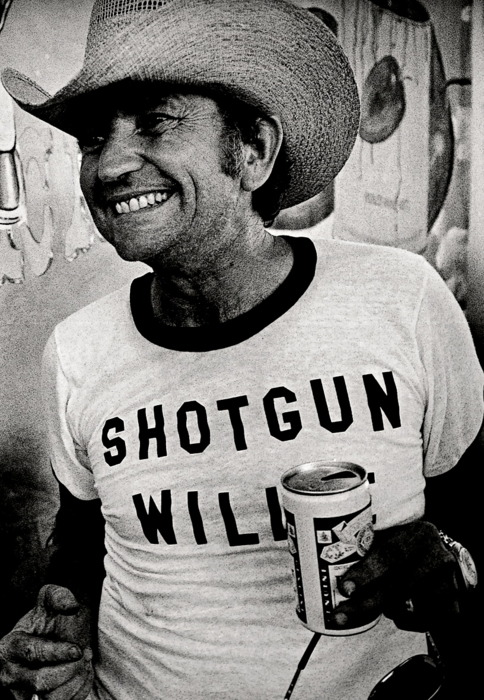
The Story Behind “Shotgun Willie” [VIDEO]

shotgun willie

This is a great story behind the great title song of a great album.

Sure Willie is widely known as the Texas Yoda, but he has had a past occasionally reminiscent of a Cops episode. Or to paraphrase the Drive-By Truckers, it’s the duality of the Texas thing.

Remember the one where his ex-aide sewed him up in his sheets as he drunkenly slept and beat him with a broom? Good times.

Here’s another gem from Willie’s newsletter:

Willie has been described as a man of wisdom and a peacemaker, but he wasn’t always the gentle soul that many now know him as. He was nicknamed ‘Shotgun Willie’ for the shootout that happened when he heard his daughter Lana was being physically assaulted by her husband Steve.

“I ran for my truck and drove to the place where Steve and Lana lived and slapped Steve around,” Willie recalls. “He really pissed me off. I told him if he ever laid a hand on Lana again, I would come back and drown his ass. No sooner did I get back to Ridgetop than here came Steve in his car, shooting at the house with a .22 rifle. I was standing in the door of the barn and a bullet tore up the wood two feet from my head. I grabbed an M-1 rifle and shot at Steve’s car. Steve made one pass and took off.”
Willie then returned to Steve and Lana’s to find Steve had left and kidnapped their young son Nelson Ray. Lana told Willie that Steve was looking to ‘get rid of him.’ So Willie drove back to Ridgetop and waited.

“Thinking Steve would come to Ridgetop to pick me off about dusk, I hid in the truck so he couldn’t tell if I was home. We laid a trap for him. I had my M-1 and a shotgun. He drove by the house, and I ran out the garage door. Steve saw me and took off. That’s when I shot his car and shot out his tire. Steve called the cops on me. Instead of explaining the whole damn mess, the beatings and the semi-kidnapping and shooting and all, I told the officers he must have run over the bullet. The police didn’t want to get involved in hillbilly family fights. They wrote down what I told them on their report and took off.”

Not clear on what ever happened to the scumbag Steve or daughter Lana, but as we say in Texas, i’m not letting facts get in the way of a good story.

T Bone Burnett Is Wrong

T Bone Burnett

T Bone Burnett Is Wrong

While discussing working on the Coen brothers upcoming Greenwich Village folk-movement inspired soundtrack for “Inside Llewyn Davis,” with American Songwriter singer/songwriter/producer and auteur of the austere T Bone Burnett took the occasion to deride both technology and self-promotion.

Now the negative impact of technology on the music industry, from piracy to inferior audio quality, is well documented and debated. Given Burnett’s years of expertise as a successful musician and producer he has the upper hand when discussing technology’s impact on sonic and creative part of the music industry.

Where Burnett gets it wrong is when he says:

“Self-promotion is a horrible thing. As soon as an artist self promotes he ceases to become an artist, he becomes a salesman.’

T Bone should know better.

Many early twenty century artists that influence Burnett’s dust-bowl aesthetic were quite adept at using the technology of their day to have their music heard and to make people aware of upcoming shows and new releases.. They were equally adept at the art, yes art, of self-promotion as they were songwriting and performing.

Ralph Stanley, who Burnett worked with on the Americana watershed OST for ‘O Brother Where Art Thou,” recounts in his book “Man of Constant Sorrow: My Life and Times” that he, his brother Carter, regularly made use of the self-promotion technology of the day, radio, becoming regular personalities on the local station WNVA in Norton, Virginia.

After graduating from high school, and receiving an honorable discharge from the Army, Stanley returned to Virginia where he and Carter formed a and their band, the Clinch Mountain Boys, and established themselves in Bristol, Virginia’s WCYB scheduling.

Would Burnett consider Ralph Stanley a “salesman” in the derisive vein he spoke above? I don’t think so.

But there Dr. Ralph was, utilizing the social media of his day, the radio — promoting his music and upcoming live shows at local schools and churches. In other words self-promoting.

Many of the folk artists that paved the way for Americana and country music honed their chops, both musical and self-promotional, traveling with medicine shows. These mobile infomercials arrived shortly after the Civil War and employed tumblers, dancers, fire-eaters, snake handlers, comedians and hillbilly musicians to attracted the locals with pockets full from selling their harvest. Once a crowd had formed some smooth-talking huckster pitched some panacea sure to cure all ailments.

These traveling shows might not have cured folks, but they allowed musicians to perform in front of an audience. It also taught them the importance of promotion and selling.

T Bone himself owes much of his storied career to the tools of self-promotion. After a series of post high school bands he landed a plum gig. a touring guitarist for a master of self-promotion, Bob Dylan’s Rolling Thunder Revue.

In 2000, Burnett produced the soundtrack and wrote the score for the Coen Brothers film, ‘O Brother, Where Art Thou?’. The award-winning, best-selling soundtrack featuring Emmylou Harris, Alison Krauss, Ralph Stanley, Gillian Welch and others. This not only brought rural roots and blues music back into mainstream consciousness it brought it’s creator there as well.

More movies, like Crazy Heart and I Walk the Line, and production credits for Elvis Costello, Allison Krauss and Robert Plant, B.B. King, Elton JOhn and many others looking for a particular, and lucrative, sound followed.

These gigs didn’t fall out of the sky or find just the right man the right mix of talents serendipitously. Burnett’s reputation preceded him. A reputation formed partially by talent and partially by promoting, self or otherwise.

Art and commerce has always had a thorny relationship, Cultural artifacts — visual arts, music, theatre , etc. — in modern history have always relied on state or private benefactors to assure the creator the lifestyle to create more work and, ideally, free from intrusion. This arrangement doesn’t come cheap.

It’s cliche to say the music industry is in turmoil. Much of the churn is self-inflicted apathy fueled by short-term, greedy delusion that music would always remain trapped in physical objects. And that the price of those objects would forever be dictated by the labels.

But the Genie made it out.

We now see the product is not the record/tape/disc. It’s the music. The invisible music contained within the grooves or tape has been released, forever to buy on demand, anywhere. Or to steal just as readily.

But in turmoil there;s often opportunity and affordable technology has also allowed artists to take control of their careers by allowing access to production, communication and promotion.

I respect Burnett, and everything he’s done, and continues to do, for a the Americana genre I deeply love. But the above quote exhibits a state of ideal detachment, of artistic purity, that he himself has not practiced.

This idea that is dangerous for budding artists that want to make music a sustainable vocation, as well as for fans that want to hear that music. If this advice was to be taken as gospel many trees would fall in the forest unheard.

But young artists know better. They’ve grown up in a mediated culture that not only feeds into their art but also into how they present it.

Just as Americana music has to recreate itself to thrive as a viable genre in the contemporary world, and not a cultural tinotype thick with nostalgic dust, musicians have adapted and thrived. We have more music being produced now than anytime in human history.

Burnett , of all people, should understand that self-promotion, and prudent technology use with fair and equitable reimbursement, is a age-old practice that paves a way for creativity and discovery.

Americanafest Day One

Dillon Hodges

This was the perfect beginning to one of my favorite times of the year. The pre-Americaafest was a blast and I was blown away by Great Peacock, Mercy Bell, Dillon Hodges, & The Kernal. And special thanks to Derek Hoke or a great show, including performing backing band for Robyn Hitchcock as he tore through Elvis tunes, and letting us ride on his $2 5 Spot coattailS.

Changes are afoot with Dillon Hodges so stay tunes and follow him on twitter @dillonhodges

I also rain into Lydia Rogers from the Secret Sisters. Look for their T. Bone Burnett follow up to their self-titled debut early next year.

Also great running into Allen Thompson. If you haven;t checked him out do so.

Coming to Nashville is a treat for me because I hear from artist and fans directly and get direct feedback of the little light that I shine on great music. I am humbled.

Not sure of this will be a daily thing while here, but look for sporadic outpourings on twitter and Instagram.

Good night music lovers.

Americana For All

carolina chocolate drops

I’ve been kicking around the ideas to address Giovanni Russonello’s “Why Is a Music Genre Called ‘Americana’ So Overwhelmingly White and Male?” i heard my mom’s advice in m mind,
“just walk away from the stupid.” Part of it was my dad’s voice “Teach ’em a lesson.” i’ve decided to go with dad on this one.

Russonello’s piece frames the recent six-week “Americanarama” tour to argue that the tour’s roster, which included Bob Dylan, Wilco, My Morning Jacket and Ryan Bingham – represents a larger cultural exclusion rampant in the genre.

Setting aside the argument that the “Americanarama” bill does not really represent the contemporary Americana genres, let’s address the premise of “Overwhelmingly White and Male”

Early country, folk and bluegrass have generally appealed to a predominantly anglo audience. Partly because many of the songs are from European source material performed by mostly white people. The trend in these genres have mapped closely to the trends in American society in general and, as opportunities have arisen, woman and people of color have stepped up to represent their unique take on the music.

The difference is that Americana proper (and it’s cousin alt.country) have never been exclusionary.

It’s introduction into popular culture came in the 80’s as MTV gave us the L.A. cow punk band Lone Justice , featuring the gritty soul of Maria McKee, and their “Ways to be Wicked” and “Sheltered videos in rotation with Jason and the Scorchers and The Georgia Satellites on the 24- hour feed.

At the same time kd Lang and Roseanne Cash joined Steve Earle, Dwight Yoakam and Lyle Lovett in shaking up Nashville.

Soon after bands like The Meat Purveyoyers, Freakwater , Neko Case, Gillian Welch, the Cowboy Junkies, Hem, Tarnation – all bands prominently featuring female artists – laid the groundwork for Americana.

An allum of the watershed “O Brother where art thou” roster, Alison Krauss, has the enviable honor of having won the most Grammys by a female artist with twenty-seven (!)

Hardly the good-old boys club that article paints for the genre.

Then there’s this:

“… if an art form is going to name itself after this country, it should probably stop weatherproofing itself against America’s present-day developments. And it hardly seems like enough to say you’re carrying on the legacies of black gospel and blues if the performers and listeners venerating them are almost all white.”

The claim that Americana is “carrying on the legacies of black gospel and blues” is specious. True, some artist incorporate gospel and blues within their style, to say that Americana is carrying on the legacy of those sage musical genres is insulting to these thriving genres and their decades of practitioners.

And the argument that since the genre appeals to a particular segments of the population signifies that genre exclusion of others is ridiculous. Much of music is self-identity. If a segment of society don’t see themselves in the performers and their stories it follows that they wouldn’t be compelled to buy the music or attend the shows. Early hip-hop was a primarily African -American cultural phenomenon which has now transcended. As for as I know on one was accusing hip-hop of excluding anglos.

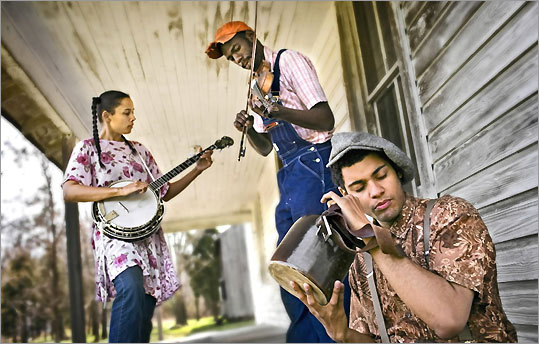
Just as people of color have taken different roads to Americana, and have contributed to it’s evolution. Los Lobos and Alejandro Escovedo bring a uniquely chicano take to the music. The Carolina Chocolate Drops and newcomer Valarie June have infused the genre with African-American string-band and folk-soul influences receptively.

Russonello places Dylan as the “the father of Americana” (I would argue Gram Parsons or Townes Van Zandt) and then points to the current shining light, Jason Isbell, as not heading the lessons of Dylan and providing anything “new.” The argument could be made that Dylan at the beginning of his career, as Isabell still is, brought nothing that hadn’t already been done by Guthrie and Seeger. Russonello then makes the case that “Music gets its power from a keen, contemporary perspective” and then “it feels facile to let this one strain of yellow-page nostalgia represent it.”

This is just lazy. Though the form, the music and singing styles harken back to a yesteryear , topics are either contemporary, like Isbell, Todd Snider and Steve Earle or dealing with the great human truths – love, hate, death – that transcend any time period.

Though the article does a serviceable job of tracing roots music’s trajectory thorough time, the conclusion shows a bias of the writer. Anything this white and male met be a conspiracy..

Americana does reflect an idealized notion of the the past (as Americans are prone to do,) but to confuse the predilections of subjective taste enjoyed by some as a kind of organized Jim Crow-style musical segregation insults a music and musicians that I celebrate daily. It also, ironically, displays a type of bigotry that all cultural forms must undergo some forced, artificial desegregation toward some imagined moral purity.

Let freedom twang!

Americana Music is the New Country Music

Screen shot 2013-05-31 at 2.48.34 PM

I’m not sure if I was the first to coin the term but I’m pretty sure i was the first to tweet it – that’s so country it’s Americana.

By that I mean as Music City continues to do what it’s always done, chase trends to broaden consumer acceptance, fill radio slots and asses in arena seats, and make truckloads of money, who looks after the legacy of the music? The legacy of twang, soul and grit that Rodgers, the Carters and Hank Sr. left us? The focus on the song as deep, personal expressions and not just target-marketed laundry lists? Ladies and gents it’s Americana straight up.

sure music Row still determines the brand “Country Music” but they don’t won the legacy or spirit. Tom Petty hit the nail squarely in the noggin when he described contemporary country music as “Bad rock with a fiddle. Zing! While the rhinestone cowboys chase hits and eschew tradition (Blake!) the real soul of country music has found a new home in the Americana camp. Now by Americana I also include the underground, muddy roots acts as well, as I believe a lot of the passion and blue-collar core is often found on that side. Here are a few videos to make my case.

Legacy: in their golden years no one in Music Row bothered to return phone calls to Johnny Cash and Porter Wagoner who were still viable a, had songs, and wanted to work. It took hip-hop/rock producer Rick Rubin and musician/producer Marty Stuart to work with these legendary men, respectively, and understand their storied place in music history. Working with their own label (Rubin) and an L.A. rock label (Epitaph) allowed these legends to produce some of their best work at the end of their lives and leave this world with dignity and fans with a few more treasures. Hell, even country music legend Lee Ann Womack teamed up with Americana stalwart Buddy Miller to stretch her wings.

Johnny Cash – “Hurt” (Nine Inch Nails)
http://www.youtube.com/watch?v=SmVAWKfJ4Go

Porter Wagoner – “Committed to Parkview”

Leann Womack & Buddy Miller – “Don’t Tell Me”

Soul – At it’s core country music is soul music. It bleeds life in common stories plaintive and wondrous. Here are some performers that reflect that rough beauty.

Robert Ellis – “Cemetery”

Jason Eady – “AM Country Heaven”

Elizabeth Cook – “Mama’s Prayers”
www.twangnation.com/blog/wp-admin/post.php?post=5944&action=edit

Twang and Grit – Musicianship has always been the stock and trade of country music , but it used to be more than a backdrop for party anthems. Here are some that are tearing it up without dumbing it down.

Sturgill Simpson – “You Can Have The Crown / Some Days”

Whitey Morgan and the 78’s – Cocaine Train

Turnpike Troubadours – “Before The Devil Knows We’re Dead”

Dale Watson – “I Lie When I Drink”

Race in Country and Roots Music

carolina chocolate drops

When the nominees for the Americana Music Association awards was released there was some that commented on the lack of diversity; which is a shortcut for racial diversity. I agree there’s no one of color represented. But the implication is that racism is to blame. Yeah, that’s not it.

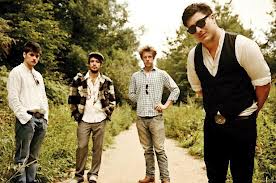
Though I do believe there is an inherent bias in the AMA wards nominees it tends towards the popular and well-known and not on skin color. If an African-American act sold as many albums as Mumford and Sons you can bet they would be o the list.

Though I’m willing to call out discrimination when I see it, the simple fast is there’s not a lot of diversity on the Americana charts, which represent the source of the radio-centric voters for the AMA Awards. Superior performers like the Carolina Chocolate Drops are few and with no representation there’s no opportunity for celebration.

Some have suggested we expand Americana to include the Blues and R&B. Though these genres, like country , folk, and jazz, feed into the greater American music ocean they are going fine on their own as mature, rich and diverse genres. Beside we already have extraordinarily talented musicians that, regardless of color, deserves celebration without us wringing our hands when we do so.

Some want to dig deeper than the charts and top level performers to see if there’s a strata of increased diversity somewhere below the surface. I’m all for seeking out undiscovered talent, but seek how far and for what reason?

Personally I’m not an advocate for pilfering other mature genres or lowering a musical bar, those are forms of racism. How far afield would we have to travel to address some imagined suppression of racial diversity?

Then there is outright racism. After appearing on the Opry stage Darius Rucker received a tweet stating that he should “leave country to the white folk.” Now that’s racist as well as historically imprecise. Huffington Post held an interesting discussion on the subject of race in mainstream country industry and culture.Though I don’t fully agree with all the discussion it’s a healthy and interesting conversation. Perhaps there should be a roundtable on race in the more left-leaning Americana genre.

Hosted by Marc Lamont Hill with guests Charles Hughes (Memphis, TN) Music Historian at Rhodes College, Cowboy Troy @cowboytroy (Mt. Pleasant, MI) Recording Artist at Warner Music Nashville, Rissi Palmer @RissiPalmer (Raleigh, NC) Country Music Singer / Songwriter, John Bryant (Dallas, TX) Ray Charles’ Drummer and Stanley Crouch (Brooklyn, NY) Writer and Music Critic

5 Americana / Roots Bands That Could Play the Superbowl Halftime

I asked my twitter followers what Americana / roots artists they would like to see play the Superbowl halftime show. I got some great suggestions and here are the results.

One things sure, it would be badass and there would be no suspicion of lip-synching.

Who would you add? Put your choice in the comments.

Drive-By Truckers – “Never Gonna Change”

Turnpike Troubadours – “Gin, Smoke, Lies”

Reckless Kelly “Wicked Twisted Road”

Hellbound Glory “Whiskey Bent and Hell Bound”

Blackberry Smoke “Good One Coming On”

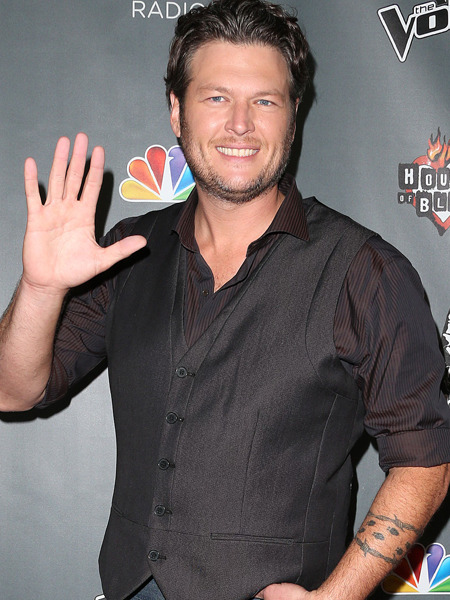
Blake Shelton Was Right

blakeshelton-450x600“It is difficult to get a man to understand something, when his salary depends on his not understanding it.”

― Upton Sinclair : I, Candidate for Governor: And How I Got Licked

I believe this quote from American author and industrial gadfly Upton Sinclair deftly underscore the mindset of Blake Shelton, who most recently stated on an episode of Great American Country’s “Backstory” that:

“If I am “Male Vocalist of the Year” that must mean that I’m one of those people now that gets to decide if it moves forward and if it moves on. Country music has to evolve in order to survive. Nobody wants to listen to their grandpa’s music. And I don’t care how many of these old farts around Nashville going, ‘My God, that ain’t country!’ Well that’s because you don’t buy records anymore, jackass. The kids do, and they don’t want to buy the music you were buying.”

One word, “duh!”

Don’t fool yourself into thinking that that there was some home-spun, old timey, sepia-washed era when country music was a noble art of heartfelt expression, Void of any motivation soiled by filthy lucre. The country music industry as an institution has always been about money. When Polk C. Brockman recorded Fiddlin’ John Carson in the 20’s he did so to provide media, namely records, to increase record players sales out of his family furniture store.

The ’50s brought us producers Chet Atkins, Owen Bradley, and Bob Ferguson. The brain trust that engaged in a mass purging of hayseed elements, honky-tonkisms and general twang from Music Row product, broadly branded the “Nashville sound.” They created a a multimillion-dollar industry by heading uptown to the city supper clubs more accustomed to genteel strings and syrupy Jordanaires accompaniment.

As Chet Atkins quipped when being asked about what the Nashville sound was. He reached into his pocket, shook the loose change around and say “That’s what it is. It’s the sound of money”.

Not since new York’s famed Tin Pan Alley has there been such a close, and profitable, relationship between commerce and art than Music Row. there is nary a hair of space between the music publishers , songwriters and the performers. The sole purpose of Music Row, as it was of Tin Pan Alley, is to make money, not to serve as a steward of cultural preservation.

This last part leads us to the big lie of Music Row that Shelton’s words exposes – that tradition in the country music industry is something to be honored. With all of this pretense of honor end product, the music, does anything but. Sure a song might name-check The Hag or The Possum but there is no other discernible stylistic or lyrical element that would lead you to believe that that song is even distant cousins with “He Stopped loving Her Today.”

Of course these changes in style are explained away as “evolution” and “changing times.”I get that. Lefty Frizell and Ernest Tubb might have been surprised by some of the pioneers of country music evolution – Willie Nelson. Buck Owens and Steve Earle. But I doubt they would conclude these newcomer’s music wasn’t an evolution kin to their very own evolved sound.

Speaking of Earle and Buck, these are the exceptions that prove the rule. If there was no entrenched industry of Country Music product they would not be measured against anything. Bluegrass, Outlaw Country and Americana are all creative cultural reactions to music Row’s stranglehold on radio, distribution, labels and brand.

Try as I might I wasn’t able to find any redeeming point in Shelton’s career. No point where he didn’t sound like anything but a shill for the system. Sure Shelton covered Mary Gauthier’ excellent song I drink for his 2004 album Blake Shelton’s Barn & Grill. But this inspired bit of risk was an aberration of a 12 year career of playing it safe. Since the he’s been towing the Music Row line.

This predictability is precisely what put Shelton in the position to be the right man for the job of telling us Music Rows’s quasi-covert MO. He’s their currently anointed wonder boy with the country music Association Male Vocalist of the Year and Entertainer of the Year tucked neatly under his $1000. belt. Celebrated performers before him had the decorum to at least give lip-service to legacy and legends while roasting them on a spit of radio fodder. Not Shelton, Oh no! This man comes clean. Loud and proud. He get’s to, in his words “decide if it moves forward and if it moves on.” Old farts and jackasses be damned!

That is as long as he colors within the lines and keeps those hits coming. Keeps those arenas packed and the money rolling in. Otherwise the next big thing get’s to fill those rhinestone boots. If Blake Shelton is guilty of anything it’s saying, perhaps inadvertently, what Music row has been screaming at us for decades. It’s about feeding the beast not someone’s nostalgic notions. It’s about awards, celebrity and status. It’s about shunning the past in pursuit of chart jockeying. Music row does not and has never been a steward of cultural preservation.

For Shelton to think otherwise would have him questioning the worth of those awards, and what churning out those those hits like McDonald’s burgers cost in personal integrity. For him to ask these questions would be asking him to “understand something, when his salary depends on his not understanding it.”

In the end Shelton said out loud told us what many of us knew all along, the Music Row emperor has no Nudie Suit.

Though Shelton and his pre-fab predecessors might be the mouthpiece of the commercial and industrial wing of Country Music TM, we the people will determine what little “c” country music will become. I believe the latter will be a hell of a lot more interesting and enduring.