Watch Out! Kendl Winter – “Rosie” [VIDEO EXCLUSIVE]

Kendl Winter

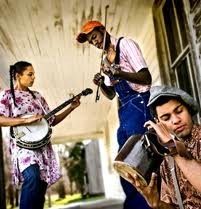
I’ve met very few people as talent and humble as Arkansas-native Kendl Winter. I chatted with her briefly before she performed live before a showing of the metaphysical country-music noir film “My Fool heart. (of which she furnished music for the soundtrack.) she held the audience in silence as her breathy keen and adroit banjo playing filled the old movie theater.

It was a treat that everyone should witness and enjoy.

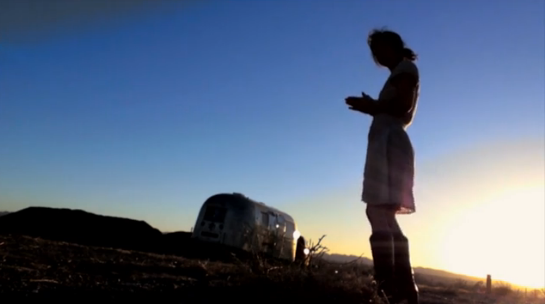
On her new video for “Rosie,” off her new full-length “It Can Be Done,” Winter hurries across the a rugged terrain as the song perambulates pleasingly around driving drums and ebbing banjo.

Mumford And Sons Cover You Shook Me All Night Long – Toronto 8/26/13

Mumford & Sons

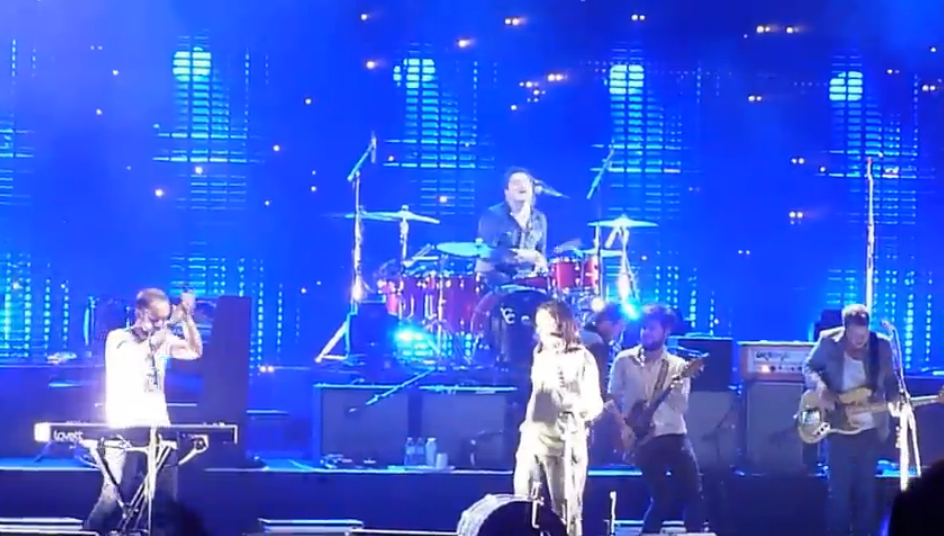
Mumford and Sons get a bad rap for being wimpy. I’ve often agreed with this sentiment. Last night in Toronto Mumford Co flashed a little edge.

In an encore that began with their standard cover of Bruce Springsteen’s “I’m On Fire” and the Babel track “Reminder.” Marcus Mumford then announced openers The Vaccines’ guitarist Freddie Cowan and then it was 1980 all over again with the familiar licks of AC/DC’s “You Shook Me All Night Long.”

Marcus Mumford, moved to the decidedly un-Mumford instrument of drums. The band found a fan that knew the words to the song and they got to star on the stage for the cover.

Watch it below:

Americana For All

carolina chocolate drops

I’ve been kicking around the ideas to address Giovanni Russonello’s “Why Is a Music Genre Called ‘Americana’ So Overwhelmingly White and Male?” i heard my mom’s advice in m mind,
“just walk away from the stupid.” Part of it was my dad’s voice “Teach ’em a lesson.” i’ve decided to go with dad on this one.

Russonello’s piece frames the recent six-week “Americanarama” tour to argue that the tour’s roster, which included Bob Dylan, Wilco, My Morning Jacket and Ryan Bingham – represents a larger cultural exclusion rampant in the genre.

Setting aside the argument that the “Americanarama” bill does not really represent the contemporary Americana genres, let’s address the premise of “Overwhelmingly White and Male”

Early country, folk and bluegrass have generally appealed to a predominantly anglo audience. Partly because many of the songs are from European source material performed by mostly white people. The trend in these genres have mapped closely to the trends in American society in general and, as opportunities have arisen, woman and people of color have stepped up to represent their unique take on the music.

The difference is that Americana proper (and it’s cousin alt.country) have never been exclusionary.

It’s introduction into popular culture came in the 80’s as MTV gave us the L.A. cow punk band Lone Justice , featuring the gritty soul of Maria McKee, and their “Ways to be Wicked” and “Sheltered videos in rotation with Jason and the Scorchers and The Georgia Satellites on the 24- hour feed.

At the same time kd Lang and Roseanne Cash joined Steve Earle, Dwight Yoakam and Lyle Lovett in shaking up Nashville.

Soon after bands like The Meat Purveyoyers, Freakwater , Neko Case, Gillian Welch, the Cowboy Junkies, Hem, Tarnation – all bands prominently featuring female artists – laid the groundwork for Americana.

An allum of the watershed “O Brother where art thou” roster, Alison Krauss, has the enviable honor of having won the most Grammys by a female artist with twenty-seven (!)

Hardly the good-old boys club that article paints for the genre.

Then there’s this:

“… if an art form is going to name itself after this country, it should probably stop weatherproofing itself against America’s present-day developments. And it hardly seems like enough to say you’re carrying on the legacies of black gospel and blues if the performers and listeners venerating them are almost all white.”

The claim that Americana is “carrying on the legacies of black gospel and blues” is specious. True, some artist incorporate gospel and blues within their style, to say that Americana is carrying on the legacy of those sage musical genres is insulting to these thriving genres and their decades of practitioners.

And the argument that since the genre appeals to a particular segments of the population signifies that genre exclusion of others is ridiculous. Much of music is self-identity. If a segment of society don’t see themselves in the performers and their stories it follows that they wouldn’t be compelled to buy the music or attend the shows. Early hip-hop was a primarily African -American cultural phenomenon which has now transcended. As for as I know on one was accusing hip-hop of excluding anglos.

Just as people of color have taken different roads to Americana, and have contributed to it’s evolution. Los Lobos and Alejandro Escovedo bring a uniquely chicano take to the music. The Carolina Chocolate Drops and newcomer Valarie June have infused the genre with African-American string-band and folk-soul influences receptively.

Russonello places Dylan as the “the father of Americana” (I would argue Gram Parsons or Townes Van Zandt) and then points to the current shining light, Jason Isbell, as not heading the lessons of Dylan and providing anything “new.” The argument could be made that Dylan at the beginning of his career, as Isabell still is, brought nothing that hadn’t already been done by Guthrie and Seeger. Russonello then makes the case that “Music gets its power from a keen, contemporary perspective” and then “it feels facile to let this one strain of yellow-page nostalgia represent it.”

This is just lazy. Though the form, the music and singing styles harken back to a yesteryear , topics are either contemporary, like Isbell, Todd Snider and Steve Earle or dealing with the great human truths – love, hate, death – that transcend any time period.

Though the article does a serviceable job of tracing roots music’s trajectory thorough time, the conclusion shows a bias of the writer. Anything this white and male met be a conspiracy..

Americana does reflect an idealized notion of the the past (as Americans are prone to do,) but to confuse the predilections of subjective taste enjoyed by some as a kind of organized Jim Crow-style musical segregation insults a music and musicians that I celebrate daily. It also, ironically, displays a type of bigotry that all cultural forms must undergo some forced, artificial desegregation toward some imagined moral purity.

Let freedom twang!
The Civil Wars’ Joy Williams on Nashville’s Lightning 100

Joy Williams - Lightening 100

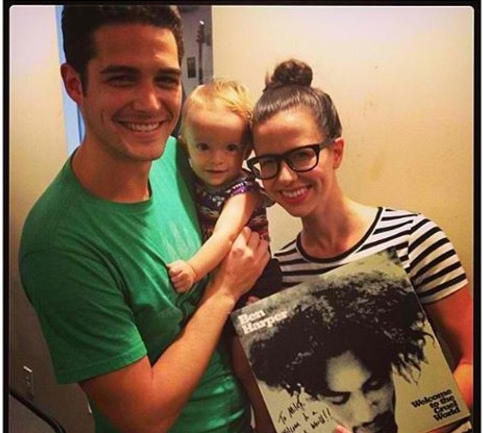
Joy Williams helps out Lightning 100’s Wells Adams morning show on Nashville
Lightning 100 morning show and discusses her new baby, covering the Smashing Pumpkins, living in Nashville, displays decent skill in a lightening round.

She also talks about, and plays some cuts from, her band’s new chart-topping self-titled Civil Wars album.

There are a few references to the “not the most comfortable time” that she and John Paul White are currently going trough. She says “John Paul and I are in a season where it’s a little bit to be determined.” and “People don’t choose to go into those phases” and “I’m desperate to play these songs. I want to be out on the read” and “I hold out hope.”

Watch Out! Valerie June – “Workin’ Woman Blues” – David Letterman 8-21-13

Valerie June - Workin' Woman Blues - David Letterman 8-21-13

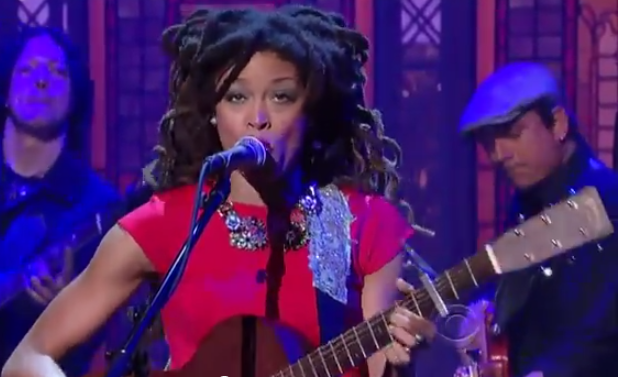
David Letterman, and his music booker at the Late Show Sheryl Zilikson, continued their ongoing support of Americana and roots music by featuring the solo network TV debut of roots-soul singer/songwriter Valerie June.

Dave yuks it up with Paul Shaffer by playing off Valerie June’s surname by joking “I think she used to be married to Johnny Cash.” June plays along and confirms that it’s true.

Junes makes her debut a memorable one. Her performance “Workin’ Woman Blues” from her debut “Pushin’ Against a Stone” is riveting.

https://www.youtube.com/watch?v=PPp7w3fHr1U

Slow Jolene Surfaces Dolly Parton’s Sultry Side

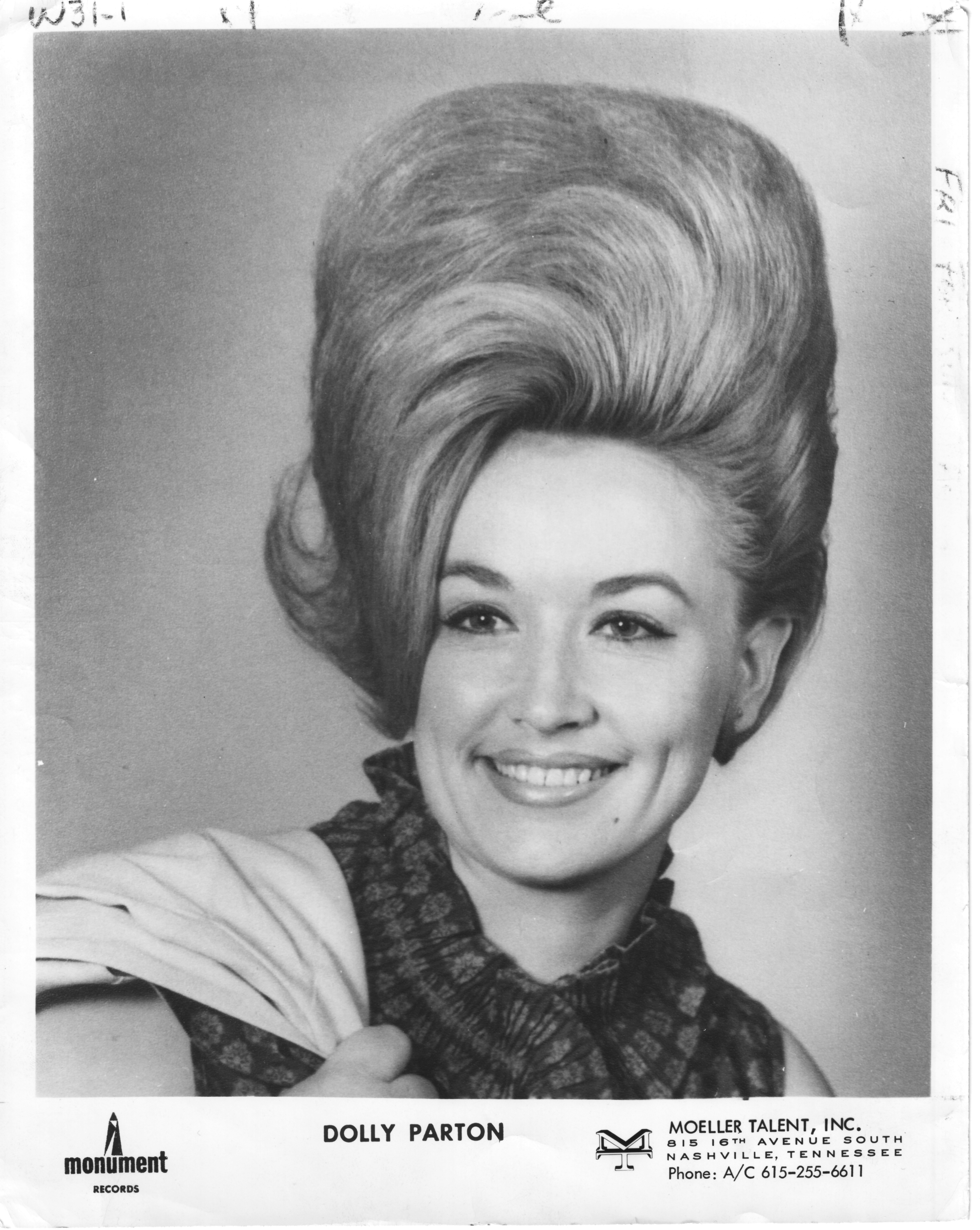
DOLLY PARTON

I tweeted this great clip a few days back and it’s gone quite viral, so I decided to park it here for your amazement. This clip of Dolly Parton’s classic “Jolene” is slowed down 25% to 33 rpm and brings out new layers of beauty that rivals the original.

Was this planed? as it a mistake? Who cares? The result is excellent as Dolly’s lovely trill moves into dusky Nina Simone territory.

Bask in the greatness of technical manipulation.

http://www.youtube.com/watch?feature=player_embedded&v=CzYHllLv_IE

Twang Nation Podcast Episode 15 – The Civil Wars, Robbie Fulks, Valerie June

Twang Nation Podcast

Hey Twangers! Here it is, number 15 podcast. In this special episode we feature the latest from The Civil Wars, currently residing on the top of the Billboard charts. Also excellent new music from Robbie Fulks, Valerie June, Aoife O’Donovan and Trisha Ivy. Also er feature a great cut from the master songwriter himself Guy Clark.

We finish up by featuring an older cut by Jim White that is currently enjoying popularity due to placement on a recent placement on FX’s “Breaking Bad.”

As always. I hope you like this episode of the Twang Nation Podcast and thank you all for listening. If you do tell a friend and let me know here at this site, Google+ , Twitter or my Facebook page.

As always , BUY MUSIC, SEE SHOWS!

Opening Song – Dale Watson – A Real Country Song

1. The Civil Wars – song: I Had Me a Girl – album: The Civil Wars (Sensibility Recordings/Columbia Records)
2. Robbie Fulks – song: I’ll Trade You Money For Wine album: Gone Away Backward ( Bloodshot records)
3. Valerie June – song: Twined And Twisted – album: Pushin’ Against a Stone (Sunday Best Recordings)
4. Jason Isbell and John Paul White – song: Old Flame – album:High Cotton ( Lightning Rod Records)
5. Aoife O’Donovan – song: Briar Rose – album: Fossils (Yep Rock Records)
6. Court Yard Hounds – song: Phoebe – album: Amelita (Columbia Records)
7. Guy Clark – song: The Death Of Sis Draper – album: My Favourite Picture of You (Dualtone Records)
8. Porkchop Express – song: On My Way Down album: Skin Your Smoke Wagon (self-released)
9. Trisha Ivy – song: Talking in Your Sleep – album: Cotton Country (self-released)
10. Jim White song: Wordmule album: “Wrong-Eyed Jesus” (Luaka Bop)

Johnny Cash – The 1950s Live TV Appearances

Johnny Cash Live

This is why the Internet is awesome. Someone on YouTube took the time to compile every TV appearance that Cash made between 1955 and 1959. It says that it;s an “incomplete” collection but who cares. These 16 gems of musical history will satisfy.

Thanks to JohnnyCashfan66 for this.

1955 – Johnny Cash (Backstage in Oklahoma City)
1956 – So Doggone Lonesome (Grand Ole Opry)
1957 – Get Rhythm (Tex Riter’s Ranch Party)
1957 – Give My Love To Rose (Tex Riter’s Ranch Party)
1957 – Home of the Blues (Tex Riter’s Ranch Party)
1957 – I Walk the Line (Tex Riter’s Ranch Party)
1957 – So Doggone Lonesome (Tex Riter’s Ranch Party)
1957 – Next in Line (Tex Riter’s Ranch Party)
1957 – Train of Love (Tex Riter’s Ranch Party)
1958 – Stay All Night & Next In Line (Country Style USA)
1958 – Give My Love to Rose (Country Style USA)
1958 – Home of the Blues & Stay All Night (Country Style USA)
1958 – Ballad of a Teenage Queen (American Bandstand)
1959 – All Over Again (March of Dimes)
1959 – Camptown Races (Bell Telephone Hour)
1959 – Don’t Take Your Guns to Town (Ed Sullivan Show)

http://www.youtube.com/watch?v=e2JhTmHhiqk

5 Americana Artists the Grand Ole Opry Should Induct

Old Crow Medicine Show

Following the ongoing trend of Music City tapping Americana music for source material and injecting some vibrant blood to an all but stagnant (but lucrative) genre, the old-time string band, Old Crow Medicine Show was invited to join the Grand Ole Opry by Opry member Marty Stuart during their concert at the Ohio Theatre in Cleveland, OH.

They will formally be inducted into the Opry at the Grand Ole Opry House in Nashville on Tues., Sept. 17.

In recent years Music Row has been looking to Americana music for new ideas, market trends and extending demographic appeal.

Sure the Opry has lost cred for ignoring great performers and casting out key members of the country music community (Hank Sr. anyone?) but it is an institution that provides a stage for broad exposure and, rightly or not, credibility.

There’s is no magic formula the Opry uses to choose who is asked to join. It’s a mix of sound, commitment, (gasp) popularity and what the Opry calls “relationships.” Relationships like backing Darius Rucker on the Orey stage for Bob Dylan’s “Wagon Wheel.”

Here are 5 Americana artists that, like Old Crow Medicine Show, would fit comfortably on the Opry stage.

The Dixie Chicks – Yeah I know, but the Chicks were always an Americana band to me. I know they and the country music industry had disagreements, but there’s no denying their positive (and lucrative) impact on the genre.

in 1986 Dwight Yoakam rescued country music from the Urban Cowboy blight and reminded people why it was fun, heartfelt and brave in the first place. Rarely has there been a better meeting of traditional and mainstream success then Yoakam? And he’s still going strong, though his new album, 3 Pears, isn’t up for CMA awards it’s up for Americana Music Awards.

Does any contemporary performer embody the sound, style and spirit of all that is great in country music more than Elizabeth Cook? The answer is no way. She’s a fan favorite and has been asked by the Opry to perform on their stage over 100 (!) times. It’s time to make it official.

For 11 albums over a 20-year career Robbie Fulks has been playing smart trad-leaning country music. Sure he hd some choice words for music row (made plain in his song “Fuck This Town.”) But Fulks disdain for the industry and love for the musical heritage is exactly what the Opry needs to gain cred.

As a member of The Byrds Gram Parsons played the Opry stage on March 1968. The band was asked to play play two Merle Haggard songs (“Sing Me Back Home” and “Life In Prison.”) The first song song won over the skeptical crowd (LONGHAIRS!) And Parsons (who was a big Merle Haggard fan) substituted “Life In Prison” for his own “Hickory Wind,” from The Byrds then current album “Sweethearts of the Rodeo,” in honor of his Grandmother, a huge Opry fan. As expected the management were pissed but the crowd and some of that night’s performers, loved it.
https://www.youtube.com/watch?v=NWjGtEmQ5Co

Listen Up! Johnny Cash – (Ghost) Riders In The Sky (Live) from ‘LIFE Unheard: Johnny Cash’

cash life unheard

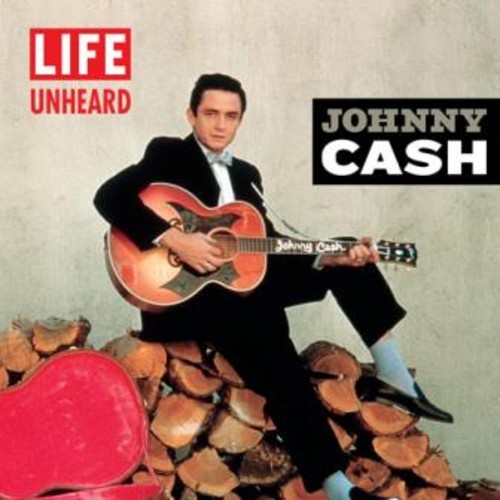
If this cut of Johnny Cash spirited (heh) rendition of Stan Jones’s classic “(Ghost) Riders in the Sky” before a rowdy crowd at Nashville’s storied Exit Inn club in indicative of the recently released “LIFE Unheard: Johnny Cash” then this to be a must-have.

‘LIFE Unheard: Johnny Cash,’ is a joint collaboration between LIFE and Sony Music Entertainment. The CD offers solo acoustic songs recorded at his House of Cash’s home studio studio in Hendersonville, Tenn., as well as live songs from the White House and Newport Folk Festival. The 12-song album also features a previously unreleased studio version of Ben Dewberry’s ‘Final Run,’ and ‘Movin’ Up,’ both recorded for Cash’s 1981 made-for-TV movie, ‘The Pride of Jesse Hallam.’

A separately sold book offers illustrated 192-page biography features many rare and never-before seen photos.

I never get enough of more Cash.

Buy

https://soundcloud.com/legacyrecordings/johnny-cash-ghost-riders-in/s-qceDF