Hank Cochran, one of country music’s most storied and prolific songwriters who wrote songs for Patsy Cline, Ray Price, Eddy Arnold, Merle Haggard, George Strait an many others passed away yesterday morning. His Wikipedia bio reads like a Mother lode for source for country gold:
Born during the Great Depression in Isola, Mississippi, he contracted pneumonia, whooping cough, measles and mumps all about the same time at age 2. The doctor didn’t think that he would survive. His parents divorced when he was 9, he moved with his father to Memphis, Tennessee, but then went to an orphanage. He was sent to live with his grandparents, in Waynesboro, Mississippi, after he had run away from the orphanage twice. His uncle Otis Cochran taught him how to play the guitar as the pair hitchhiked from Mississippi to southeastern New Mexico to work in the oilfields.
and my persoan favorite.
While working at publishing company Pamper Music, he used to spend nights playing at a Nashville bar called Tootsie’s Orchid Lounge. While there a new guy showed up and Cochran was amazed, he then encouraged management to sign the young songwriter, Willie Nelson, giving Nelson a raise that was coming to him at the time.
This from the press release:
Last night, Jamey Johnson, Billy Ray Cyrus and Buddy Cannon dropped by to sing songs with Hank, and this morning the legendary songwriter was surrounded by family and friends when he passed away at his Hendersonville, Tennessee home. A private, family memorial will be held in the near future, and a public service will follow. Details will be forthcoming.
The family asks that you respect their privacy at this time and, in lieu of flowers, request those wishing to honor Hank make donations to the Nashville Songwriters Hall of Fame Foundation.
Hank was inducted in to the Nashville Songwriters Association International Hall of Fame by unanimous vote in 1974, and was honored by B.M.I. in June 2009 for his six-decade long career of hits, that includes country classics: “I Fall To Pieces,” “Make The World Go Away,” “Ocean Front Property,” “The Chair” and “Don’t You Ever Get Tired Of Hurting Me.”
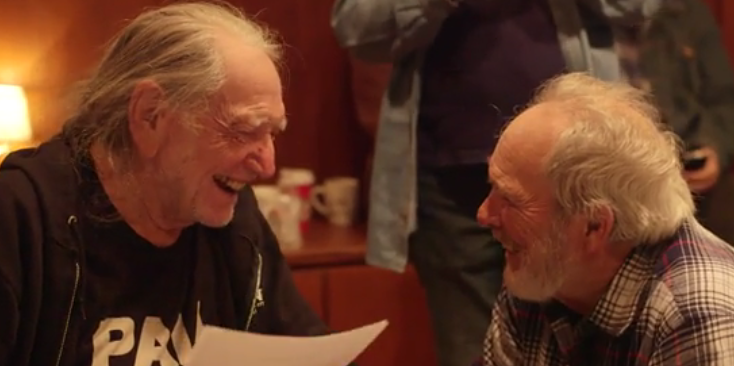
If there was a country music Mount Rushmore two legendary (and appropriately weathered) mugs sure to be immortalized in granite would be Willie Nelson and Merle Haggard.
Willie and The Haggard have left their indelible imprint on Country music by spearheading two spirited responses to the slick sound of 50s and 60s Nashville, Outlaw country and the Bakersfield sound respectively. Willie (77) and the Hag (73) show no signs of slowing down with ongoing touring and debuts on new labels ( and in Willie’s case a follow up) and both are back to buck mainstream Country trends by assuredly reasserting their mark on the future by mining tradition.
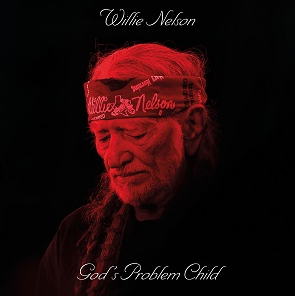
Country Music, the title of Willie’s Rounder Records debut, can be read as both a historical affirmation of the genre and a proclamation that the current pop variety overtaking the airwaves does not have a lock on the moniker Never a slave to the genre Willie infuses these 14 classic covers (and one unearthed original) with his laid-back jazzy approach to make them fresh and compelling. Lack of collaboration is not a short-coming Willie embodies. He might collaborate with even a fence post if the mood struck him. But what I consider a perfect fellow Texan T Bone Burnett (Grammy winner for Robert Plant and Alison Krauss’ Raising Sand and Academy Award winner for the Crazy Heart soundtrack ) to handle production and brought some Nashville’s best talent – Buddy Miller,Jim Lauderdale, mandolinist Ronnie McCoury, banjo player Riley Baugus as well as long-time Nelson harmonica maestro Mickey Raphale – and worked with Willie to choose the material, and steps back in the production and allows Willie and the material to shine.
The highlights include a sparse and elegant version of Merle Travis’ Appalachian coal miner lament Dark as a Dungeon which takes on a topical context in light of the recent West Virginia and Russian tragedies, the traditional Gospel number Satan, Your Kingdom Must Come Down which suits Willie’s sinewy voice backed by a instruments that emit a fitting Southern Gothic chill. The oft-covered Satisfied Mind is a solid study on appreciating what you have and is given authority in this delivery. The swinging Pistol Packin’ Mama, which was a number one single for Bing Crosby and The Andrews Sisters, throws off tons of playful cowboy cool.
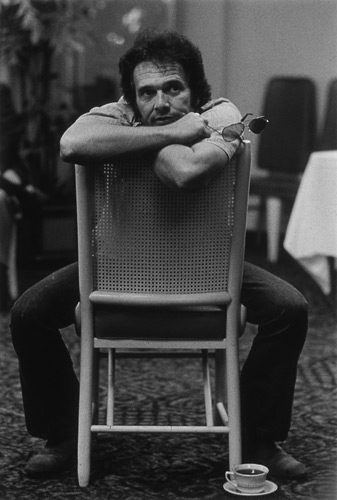
I wonder if Haggard asked George Jones if he could borrow the title of his 1980 album I Am What I Am? Hag’s version made up of all originals and show him as feisty, poetic and occasionally solemn as ever. Recorded with his ace band the Strangers, as well as his son Ben on guitar, at his Northern California headquarters, the Shade Tree Manor studio, and produced by Haggard and longtime collaborator Lou Bradley, this album fits nicely into Haggard’s storied catalog. The past fist-clenched defiance of Okie from Muskogee and The Fighting Side of Me has been replaced with a contemplation and mature restrain. But Haggard is still willing to say, not shout, what’s on his mind.
The bitetrsweet I’ve Seen It Go Away reminisces better times in a rear view mirror. Pretty When It’s New and The Road to My Heart shows that Willie is not the only one with a jazzy traditional pop bent. The spirit of Bob Wills inhabits the lively twin-fiddle fueled Live and Love Always, featuring a duet with his wife, Theresa, as Haggard gives arrangement instructions mid-song. Bad Actor is a great smooth country number about a man going through the motions in a dead-end relationship. Mexican Bands is a great mariachi-tinged waltz south of the border where haggard alludes to a pastime he might have picked up from Willie – “And early mañana smoke what I wanna, And listen to Mexican bands.”
Longtime fans know that both of there men are masters of the understated guitar, and throughout both releases there is testament to their subtle artistry. There are welcome reminders of the beauty and majesty possible when performers, young or old, are courageous enough to perform work from the heart.
Willie Nelson - Country Music
Merle Haggard - I Am What I Am
Kris Kristofferson’s latest is actually some of his earliest. Please Don’t Tell Me How the Story Ends: The Publishing Demos 1968-72 is a collection of raw demos made to shop his songs around to singers while sweeping floors at Columbia Studios in Nashville (where he later first met Johnny Cash.) I listened to 16 cuts from the album streaming over at NPR and it’s a beauty. The back and forth with Kristofferson and the recording engineer does not take away from the artistry from this master songwriter. There are classics like Me and Bobby McGee,made famous by a woman that dated Kristofferson for a time, Janis Joplin. There is also the title cut which was recorded by Bobby Bare and If You Don’t Like Hank Williams latter recorded by Hank Williams Jr. With Willie and Merle Haggard coming out with releases this month Please Don’t Tell Me How the Story Ends just makes this one of the best bumper crops in quite some time. The down-loadable version is on sale now at Amazon.
Kris Kristofferson reminisces about his days playing football. The days before he was pulled because of too many head injuries, that is.
CMT interviews the Texas Yoda, Willie Nelson about his new T Bone Burnett produced album, Country Music.
Dwight Yoakam & Merle Haggard will perform together June 18 & 19 at Oregon’s Chinook Winds Casino Resort.
Speaking of Brother Hag, the LA Times Pop & Hiss get’s on the bus with the Merle while in town for the Stagecoach Festival.
The Internet not only allows this site to exist but it makes discovering bands (and my work) a lot easier. I discovered Mandy Marie and the Cool Hand Lukes after coming across a featured review of their new release $600. Boots over at the the No Depression site (are you a member? You should be) written by the good folks over at hyperbolium.com. The part of the review that caught my eye was the comparison with Ms. Mandy Marie and Ms. Wanda Jackson. After listening to $600. Boots and hearing Ms. Morris bet out her songs, rip her tele her and her Cool Hand Lukes (Morrison Foster – upright bass, Eric Grimmitt – Telecaster numero dos, Lewis Scott Jones – drums) I do believe that Ms. Jackson would be proud (and might jump on the stage with them.)
This is the wrong side of the Americana tracks. Evoking barrooms with chicken-wire caged stages, wood shavings on the dance floor, good-natured brawls, whiskey-fueled tears, Saturday nights with little thought to Sunday morning. Stories of sin, salvation, cheating, fighting, wayward youth, hot-roding, all-night trucking, doping and boozing spiked with an amped-up hillbilly Rockabilly/Bakersfield style that makes all that suffering sound like a grand old time.
Dresser Drawer Bible is a motel room honky-tonk Gospel-tinged number sang by a gal at the end of her rope and the title cut train-chugs Cash style road-weary tales that proclaims in the chorus “We’re too dumb for New York. Too ugly for L.A.”
Booze and broken heats are on fill display with This Old Tattoo, is a boot-skooting broken hearted tale of emotional and skin-art regret, and (I’m Gonna) Drink You Out Of My Mind a high-gear jaunt on forgetting. For pure honky-tonk-girl-had-enough goodness you could do any better than Leave Me baby, Leave Me be, which sounds like a Loretta Lynn song written on meth.
Like a shot of good whiskey $600. Boots ends with a smooth burn, a blazing version of Jimmie Roger’s classic Mule Sinner Blues complete with Ms. Marie’s dead-on yelping yodel.

(I’m Gonna) Drink You Out Of My Mind (mp3)
“Everybody get’s their own take on a song. They find something that they can tap their foot to or clench their fist to. Hopefully it’ll be somewhere in between.” Malcolm Holcombe
Malcolm Holcombe is like a myth. A backwoods character in a Southern Gothic novel with a voice filled with a grave-dirt rattle and telling tales of simpler, and harder, times. Times he knows about. Surviving brushes with Nasvhille Big Labels, addictions and demons – No less than Steve Earle once famously said of him “”Malcolm Holcombe is the best songwriter I ever threw out of my recording studio.” Strong praise from a man that knows a thing or two about demons.
On the stage he casts out demons away like a man possessed. Eyes rolled back, head shakes, spinning tales in his graveled yelp, standing up, walking away from his chair in mid-song. Not missing a lick on his guitar.
Malcolm Holcombe isn’t for everybody. But if you love music with heart and soul. Music that’s been somewhere and seen a thing or two, then he might be just the man for you.
I sat down with Malcolm Holcombe on a rainy afternoon last month in Nashville.
Twang Nation: You were bron in Weaverville, N.C., what were your musical influences growing up?
Malcolm Holcombe: A lot of different sources. My mama played a little French harp and she was very supportive. I litened to the Grand ‘Ol Opry on the radio, Flatt and Scruggs, and Stringbean (David “Stringbean” Akeman) was always one my favorites. Grandpa Jones. Bluegrass music. And then in the early 60′s when all the Rock ‘n Roll starting hittin’ some of that. Mother had a few records. The Nutcracker Suite and Tennessee Ernie Ford. I had an Uncle that was a Baptist Preacher that made records and we used to play those. Used to sing songs in church.
TN: Tell me a little bit about your High School band, the Hilltoppers.
MH: Oh yeah, we got out and played a Sadie Hawkins dance or two. We covered some new folk songs, Peter Paul and Mary and such, as well as old folk songs.
TN: You lived here in Nashville for a while and had a brush with the big label system.
MH: Yeah, I lived in Nashville for several years. I’m not sure what happened when I was with Geffen. My album (100 Lies) got shelved and a lot of folks got axed, people were just moved around the checker board you know? I think things are better now because they sure were in a pile of bullshit for about 8 years. So in my opinion they are looking up.
TN: Well, they certainly are for you. You’ve some out of some hard times come back with great work that has some pretty impressive critical and audience support.
MH: I don’t know about that. I’m just trying to be of service.
TN: I checked out the videos of you on fan made YouTube videos, and checked your Facebook and Myspace pages, and you’ve got a loyal fan base.
MH: Well, it flips me out. t’s a miracle. To have a pulse and be able to share a tale or two. It just goes to show that if you hang around the barber shop long enough you’re gonna get a haircut. I just hung on ’til I did.
TN:You tour Europe quite a bit don’t you?
MH: Yeah, I’ve been fortunate enough to get over there. I met a woman over there, Joanna Serraris (promoter for Musemix) is working with a lot of Americana artists. Andrea Parodi (the late Sardinian Folk Singer) he was a great songwriter, very soulful and passionate. He helped me and used to tour manage and helped a lot of people.
TN: Do you have a strong following there?
MH: I don’t know, if anybody shows up I’m thankful.
TN: Europeans seem to me to be open the rich history of American music that I think you best represent. More than whatever is on pop radio.
MH:Well I’ve been fortunate to have folks here and over there that have been appreciative, I can’t say that one part of the world is more so than the other. I’m just glade to be of service doing my job. It’s easy to get complacent. We’re pretty spoiled in America, but we are only 200-plus-change years old. There are peope playing music here that opens doors to the roots music of America and England, Ireland and Germany. Education and open mindedness is the key. I’m hopeful. These are hard old times and I’m just lucky to be of service, to have a job, to have a purpose.
TN: Onstage you play like you have a purpose.
MH: Well you want folks onstage to deliver. If you’re going to raise corn you gotta get your hands on the plow.
TN: You seem to really be in another place onstage.
MH: And scared to the dickins! (Laughs) Still scares me to get up there. But I’m glade when I do it. You’re from Dallas right?
TN: Yeah.
MH: You ever heard of the All Good Cafe?
TN: Yeah. That’s a great place to see a show and get a beer.
MH: That’s were I saw this guy once there named Slim Ritchie, he plays in Texas a lot. I think he lives down there. He reminded me of Django Reinhardt, Man he was smooth. Made it look easy. I saw this one l little lady around San Antonio that was gifted and talented and was about knee-high to a grasshopper, but she could belt it out, Bianca DeLeon. She’s a fine talent but no bigger than a minute.
TN: I’ll check her out. Now on your new album, For The Mission Baby, you are working with producer Ray Kennedy again (he also produced Holcombe”s last release 2008′s Gamblin’ House.)
MH: Yeah, I’ve been talking to Ray for a long time and I thought it would be a rewarding experince to work on a project with Ray. And thanks to this little fledgling lebel in Asheville, NC (Echo Mountain Records) we were able to make a deal. They brought Ray on board and let me call the shots and have the creative control and I appreciate that. It’s very rare in this business to make a record like this, with great musicains, without people breathing down your neck to make a hit. Man, make a hit- I don’t even know what that is. It’s beyond my understanding, that’s not my purpose
TN: For a typically live solo act you have some great help on this record.
MH: Aw it’s wonderful, we had more fun! I saw Tim O’Brien (bouzouki, banjo, mandola, fiddle, harmony vocal) last night and he was right in the pocket at this PBS Song of America taping we did last night. a lot of good people, David Roe on bass, he was on Gamblin’ House and Wager, I wanted to work with him again. Jared Tyler from Tulsa (dobro, lapsteel, harmony vocal), he’s got it in his blood and his skin the way that music pours. And Lynn Williams on percussion, Lynn’s been with Delbert McClinton for years. Ray’s wife Siobhan (Maher) and Mary (Gauthier) on backing vocals. It’s a lot of history ans scary stuff ya know (laughs). But we played as a band and after one or two takes we were done. Very organic.
TN; This seems like a more upbeat album than Gamblin’ House. Is it because of the fun in the studio?
MH: Well, everybody get’s their own take on a song. They find something that they can tap their foot to or clench their fist to. Hopefully it’ll be somewhere in between. We did have a wonderful two or three days cutting it with thise folks. I have some wonderful memories. Hopefully people will feel that like you do and it’ll ease the burdens of the passing of time.
TN:Your finger picking style, playing the bass, rhythm, lead, percussion along with your vocals, reminds me a lot of style of Lightnin’ Hopkins.
MH: Well, that’s kind of you to say so. It’s just me trying to hone down desperation, trying to hone down frustration. We’re are all products of our raising, our environment. Like you and Dallas. Where are you now?
TN: Right now I live in San Francisco.
MH: Man, I love California. It’s really pretty. The most red tailed hawks I’ve ever seen. In Santa Ynez, North of Santa Barbara there’s a place, uh, Tales from the Tavern. It’s run by Ron Colone. He’s got a series that gets folks to spin a tale and pick a tune. Ron’s a sweet man and a promoter and he has this wonderful series of people that come pick and sing. Ramblin’ Jack Elliott’s played there. Have you been?
TN: No, but it’s now on my list.
MH: Well you need to do. It’s not that far from San Francisco. Sweet people, nice as they can be.
TN: You opened for Merle Haggard. Did you get to meet the man?
MH: Very briefly. There was one show that I was at and his first song was Silver wings and I just about melted into the floor.
TN: Who else have you played with that impressed you?
MH: I got to play with John Hammond, he’s a sweetheart. Richard Thompson, he’s such a gentleman. He’s a real picker and writes those great songs. I remember The Fairport Convention, they had great harmony. And Shelby Lynn, she’s a wonderful songer and performer. A lot of people have been good to me thank the Lord.
(starts to rain hard)
TN: Looks like it’s coming down hard. I’ll wrap up so we can get out of here.
MH:Yep, we better get before we all get water logged.